


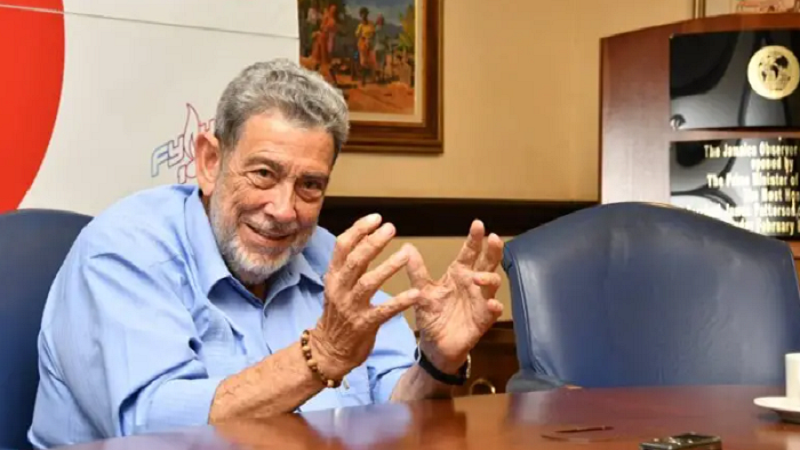
The Caribbean’s fight for reparatory justice must remain sharply focused and not fall prey to “distractions and sideshows,” according to Dr. Ralph Gonsalves, former Prime Minister of St. Vincent and the Grenadines. Speaking at a Jamaica Observer Press Club event, Gonsalves strongly dismissed arguments highlighting African involvement in slavery, characterizing them as calculated attempts to divert attention away from the massive, systematic role European states played in the transatlantic slave trade.
Now serving as a senior adviser to the Repair Campaign, an initiative launched in 2022 to advocate for reparatory justice alongside the Caricom Reparations Commission Gonsalves emphasized that the push for reparations is a modern international human rights issue, noting that the United Nations recently declared slavery the “gravest of crimes against humanity”.
The movement seeks to directly address the deep economic and social scars, described as the “many-sided legacies of underdevelopment,” caused by native genocide and the enslavement of African people.
Gonsalves argued that critics frequently try to derail the movement by steering discussions toward peripheral issues, such as African complicity, rather than confronting the structural scale of European involvement. He pointed out that the British state systematically organized the trade by encouraging the capture of individuals, holding them in forts, and transporting them on ships to endure forced labor on plantations in nations like Jamaica and St. Vincent. He urged advocates to “keep our minds on the main event”.
Furthermore, the veteran politician dismantled arguments suggesting that Britain and other colonial powers have already provided compensation to the Caribbean through trade arrangements and development assistance. He described this historical aid as “minuscule” compared to the vast wealth extracted from the region over centuries of colonial rule.
Using the post-World War II banana trade as a prime example, Gonsalves explained that British support for Caribbean exports was driven by Britain’s own economic constraints rather than altruism. Lacking sufficient US dollars to purchase bananas from Latin and Central America, Britain paid the Caribbean in “pounds stolen” to secure their own food supply. Ultimately, Britain abandoned these preferential trade agreements when it suited their economic goals to enter the European single market.
The devastating economic effects of this exploitation remain highly visible today. Gonsalves linked the current need for reparations directly to present-day development challenges across the Caribbean. He pointed out the enduring lack of land ownership, savings, education, and generational wealth among formerly enslaved populations following Emancipation. This lingering systemic inequality stands in stark, historical contrast to the massive financial compensation that the British Government paid directly to slave owners in the 1830s.