


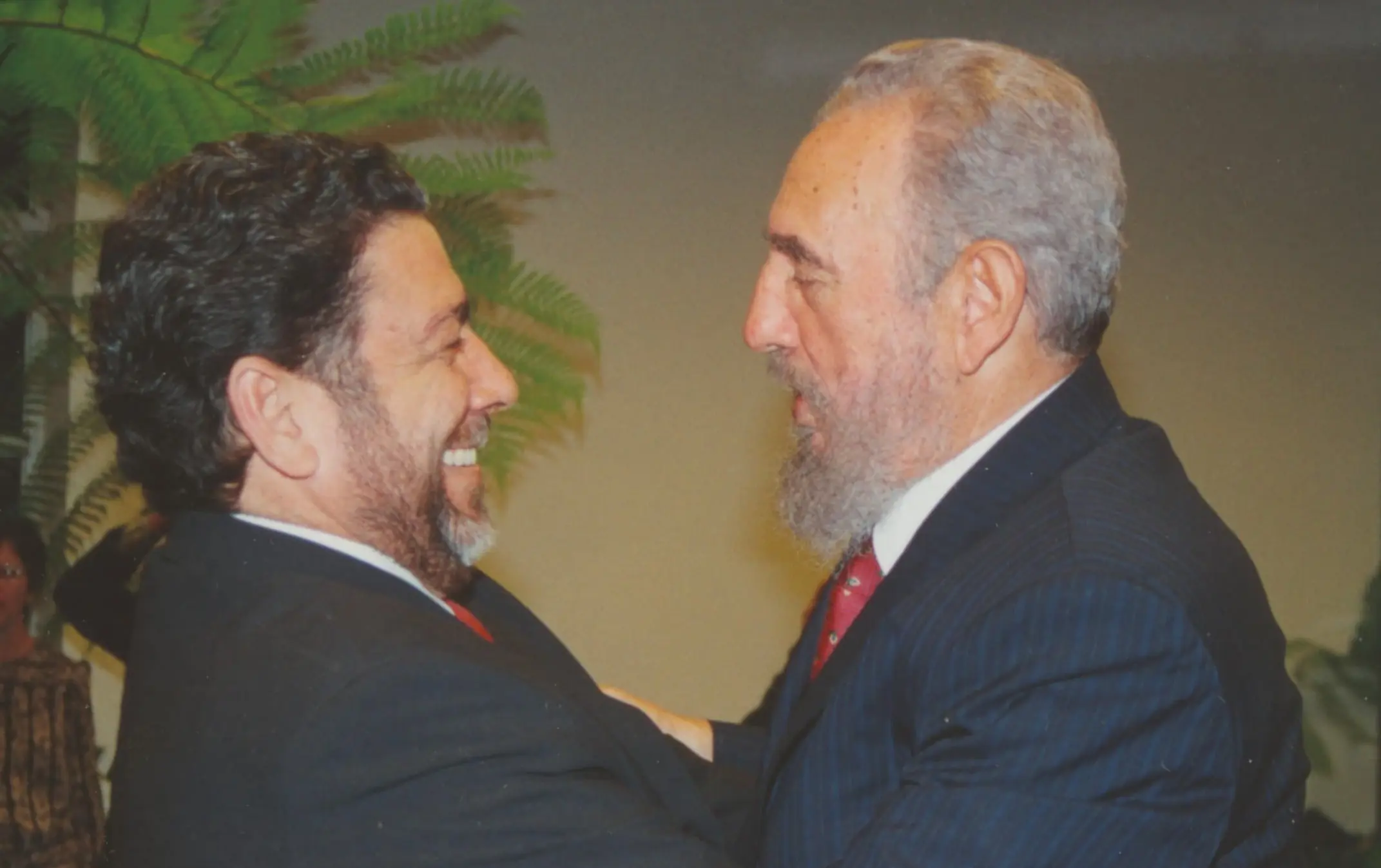
Former Prime Minister Ralph Gonsalves has issued a passionate and urgent plea regarding the deepening humanitarian crisis in Cuba, characterizing the United States’ blockade against the island nation as “criminal conduct in the sense of a war crime”.
In a comprehensive address, Gonsalves outlined the devastating impacts of the energy shortages on the Cuban people, called for immediate and tangible solidarity from Caribbean nations, and presented a detailed contingency plan to rescue Vincentian medical students currently studying in the struggling country.
According to Gonsalves, the core of Cuba’s current emergency stems from a severe lack of energy resources, exacerbated directly by US foreign policy. Because Cuba internally produces less than 40% of its energy demands, it relies heavily on imported fuel. However, the US government has aggressively pressured international entities and threatened physical intervention to prevent oil from reaching the island, resulting in Cuba not receiving fuel shipments for nearly four months.
Gonsalves reported that the country has suffered multiple nationwide blackouts lasting in excess of 24 to 36 hours. He shared harrowing accounts of the human toll, noting that children are being delivered in hospitals without electricity and that patients relying on ventilators have died due to the power failures.
Gonsalves directly criticized the successive administrations of Donald Trump and Joe Biden for tightening these restrictions simply because Cuba operates under a different political and economic system. Addressing Trump directly as a “neighbor” and a “friend,” Gonsalves appealed to the former president’s professed Christian faith, calling his desire to “take” Cuba as a “nice piece of real estate” a crime against humanity. He further highlighted the hypocrisy of the US threatening to bomb Iran if the Strait of Hormuz is closed to oil shipments, while simultaneously striving to deny 10 million Cubans access to basic energy.
To underscore the injustice of the blockade, Gonsalves reminded his audience of Cuba’s extensive history of helping other nations in times of crisis. He pointed out Cuba’s deployment of medical personnel to Italy during the COVID-19 pandemic and to West Africa during the Ebola outbreak—even noting a tragic case where a Cuban doctor died of Ebola and had to be buried in West Africa.
Locally, Gonsalves emphasized that St. Vincent and the Grenadines is deeply indebted to Cuba. He noted that without Fidel Castro’s support, SVG would not have its international airport, the Modern Medical and Diagnostic Centre, or the vital influx of Cuban doctors and nurses that helped solve the nation’s nursing shortage in 2001.
Gonsalves stressed that the Caribbean community (CARICOM) must move beyond annual denunciations of the blockade and take proactive, physical steps to help. He proposed several specific measures for CARICOM and OECS governments:
Emergency Shipments: Sourcing ships to immediately send rice, flour, and critical medical supplies to the island.
Direct Financial Aid: Having each Caribbean nation send $200,000 Canadian dollars to Cuba, utilizing Canadian banks to bypass US dollar sanctions.
Sustaining Diplomacy: Providing interest-free loans to the Cuban government to ensure they can pay their staff and maintain their embassies across the Caribbean.
Public Donations: Encouraging citizens to donate to a local bank account established by the SVG-Cuba Friendship Association.
Gonsalves also strongly criticized politicians in the region, such as Trinidad’s Kamla Persad-Bissessar, who have refused to support Cuba on the grounds of opposing a one-party state, pointing out the hypocrisy of such leaders happily borrowing money from China.