


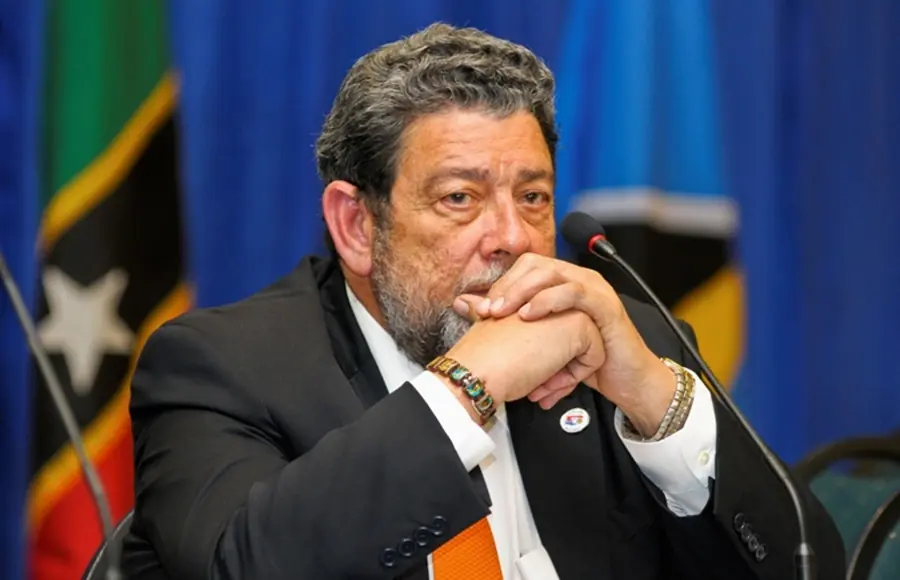
St Vincent’s former Prime Minister, Ralph Gonsalves, assesses current regional relationships within CARICOM as increasingly fractured, lacking cohesion, and diverging from traditional principles of solidarity.
On Wednesday, he expressed deep concern that regional unity is being undermined by some leaders’ attempts to “suck up to the empire” (the United States) and a failure to maintain a united front on critical geopolitical and economic issues.
Gonsalves describes a recent speech by the current Prime Minister of St. Vincent and the Grenadines (Dr Friday) at the CARICOM meeting as “vacuous” and “empty,” lacking any real analysis or content. He worries that such “performance bravado” reflects poorly on the country’s standing in the Caribbean.
The former PM was highly critical of Trinidad and Tobago’s Prime Minister, Kamla Persad-Bissessar, labeling her recent rhetoric as “dangerous” and “downright dangerous” and argued that she is abandoning the region’s independent stance to align with U.S. interests, specifically under the Trump administration.
Gonsalves fears that during engagements with high-level U.S. officials (like Marco Rubio), CARICOM heads will speak at “cross purposes” rather than presenting a coherent regional position, which ultimately weakens their bargaining power.
He insists that CARICOM must remain a “zone of peace” and act as an interlocutor for Cuba and Venezuela and criticized leaders like Persad-Bissessar and Jamaica’s Andrew Holness for pivoting away from traditional solidarity with these nations.
Gonsalves emphasized the principle of ideological pluralism, arguing that regional leaders must respect the internal governmental arrangements of neighbors like Cuba, even if they differ from Western-style democracies and views lecturing these “brothers and sisters” on their political systems as a betrayal of regional history.
Gonsalves highlighted several unresolved issues, particularly with Trinidad and Tobago, that he believes are “strangling” regional cooperation:
Trade and Foreign Exchange: He points to the inability of Vincentian farmers to obtain foreign exchange for goods sold to Trinidad, which has drastically reduced agricultural trade.
Unfair Competition: He accuses Trinidad of providing subsidized energy to its manufacturers, allowing them to “hollow out” the manufacturing sectors of smaller OECS nations like St. Vincent and the Grenadines.
Airspace and Debt: He cites ongoing disputes over the collection of upper airspace fees (CANAS) by Trinidad and the failure to settle outstanding Clico-related debts owed to OECS countries.
Protectionism: He notes that Trinidadian flour is “musling in” on markets like Antigua by bypassing treaty-mandated tariffs meant to protect smaller regional producers.
Gonsalves said while “freedom of movement” is a core principle of the CARICOM Single Market and Economy (CSME), the speaker suggests some leaders support it only in principle but not in fact. He said that concerns about Venezuelan migration are sometimes used as a pretext to block migration from other Caribbean islands (like Grenada or St. Vincent) to maintain specific “ethnic balances” and electoral advantages in countries like Trinidad.
The former PM advocates for the establishment of an “executive CARICOM commission” to speed up the pace of integration, noting that the current structure leads to public dissatisfaction with the organization’s slow progress.
Despite these criticisms, her maintains that the reparations movement remains a vital area where CARICOM must continue to exert collective energy and action on the global stage.