

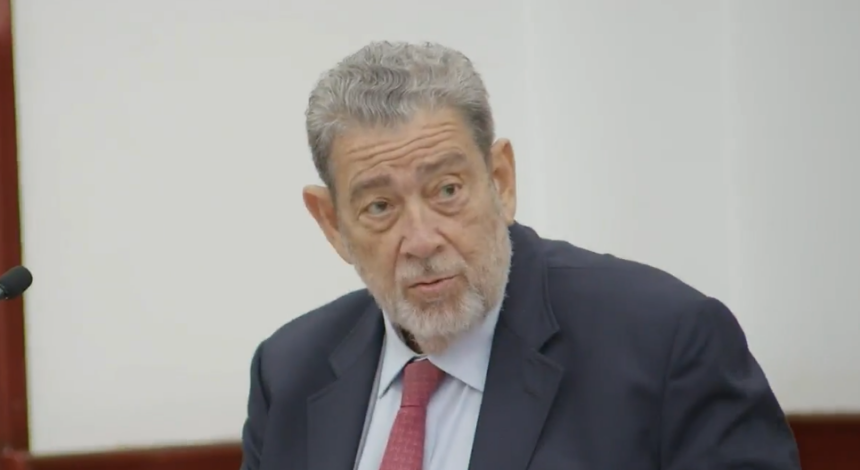
Opposition leader Ralph Gonsalves on Monday said the regional fallout from the conflicts involving the United States and Iran is expected to manifest through severe economic strain, deep diplomatic divisions within CARICOM, and critical challenges to international law.
The most immediate regional impact is a projected energy and cost-of-living crisis where Brent crude oil prices have jumped significantly, surpassing $100 USD per barrel, a nearly 28% increase in a short period. This will lead to an inevitable spike in the fuel surcharge on electricity bills, though a time lag means the full impact may not be felt immediately.
Gonsalves said for St. Vincent alone imported over $200 million in energy products last year; rising global prices will drastically increase the foreign exchange required to pay for these imports. This triggers widespread inflation for food and manufactured goods due to increased shipping and production costs.
Fuel prices for vehicles could rise toward $20 a gallon, heavily impacting minibus and taxi operators. Additionally, jet fuel prices are rising faster than gasoline or diesel, which is expected to increase the cost of travel, he said.
The former Prime Minister said the current conflicts has created a significant rift in how Caribbean nations engage with global powers and said the regional body is currently divided on its response.
“While all members nominally agree on principles of multilateralism and peace, their applications differ: the government of Trinidad and Tobago reportedly supports the U.S. actions 100%, whereas Jamaica maintains a more “nuanced” position, and others argue that the U.S. strikes were a clear breach of international law”.
He characterized the U.S. strikes as “lawless” and “audacious,” particularly because they occurred while negotiations brokered by Oman were reportedly showing progress. This is viewed as a dangerous precedent for small states like St. Vincent, which rely on international law as their “shield and sword”.
Gonsalves said there are concerns regarding unintended consequences of the conflict that even the U.S. may not be able to control and notes that while Iran’s retaliatory bombing of Gulf States was also contrary to international law, the initial U.S. action set a destabilizing tone.
In response to these pressures, he said there is a renewed push for regional energy independence.
There is a strong call for a revived (PetroCaribe) agreement with Venezuela to provide more generous oil terms to the region.
“Leaders are exploring the possibility of using CARICOM mechanisms to access oil from Guyana to mitigate the impact of the global supply crunch and inflation”.
