

St Vincent government officials have assured North Leeward residents that a proposed project to extract volcanic material from the Richmond River area represents a “gold mine” of opportunity for economic stimulation, job creation, and long-overdue infrastructure improvements.
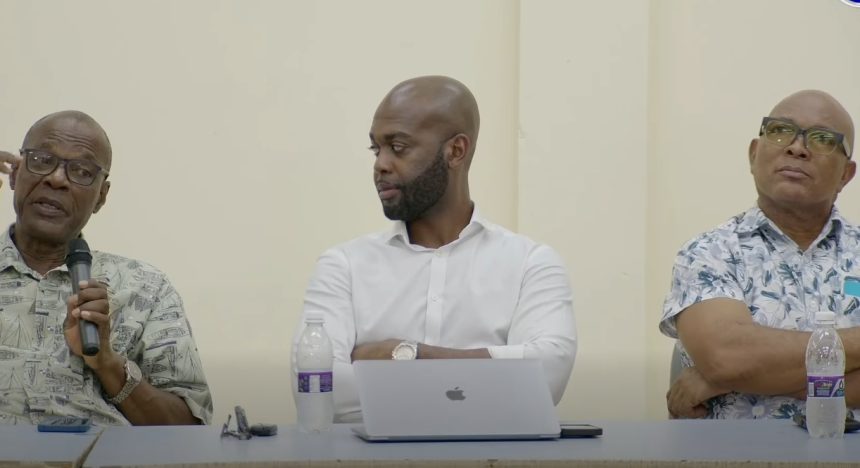
The consultation, part of the “North Leeward Matters” series held at the Golden Grove Learning Resource Center, featured a panel of high-level ministers and technical experts who outlined the benefits of utilizing the area’s vast deposits of “Rabaca material”.
Minister of Health, Daniel Cummings, explained that the initiative mirrors successful long-standing operations on the island’s windward side. However, he emphasized that North Leeward holds a distinct geographic advantage: “Unlike the windward side… where the sea is rough, you have that extreme advantage here… you can pull the boats up on this side and extract the material by a ship to go and sell it”.
Cummings further clarified that the extraction involves no removal of topsoil and is focused on material naturally deposited by the river, which would otherwise wash into the sea and cause environmental issues.
Minister of Transport, Nigel Stephenson, offered a “solemn pledge” that revenue derived from the sale of these materials would be used specifically for the benefit of the people. “North Leeward will benefit like you have not seen over the past five or even 20 years,” Stephenson stated, noting that the constituency’s infrastructure is due for significant upgrades.
Area Representative and Minister of Tourism took a firm stance on ensuring immediate community benefits. He challenged the extraction company, Bragsa, to commit to specific projects rather than vague future promises.
“Tell us what we’re going to get by the end of this year and next year,” Dr. Shallow demanded, specifically calling for the construction of bus stops in Peter’s Hope and Rose Bank, the completion of delayed road projects, and the swift construction of a bridge in Fitz-Hughes.
CEO of Bragsa, provided a technical overview of the project’s scale. He estimated that within a three-kilometer range of the Richmond River, there are approximately 4.2 million cubic meters of material. Tham calculated that extracting and selling 75% of this material at current market rates could generate over $83 million EC.
“Do nothing is never an option,” he argued, explaining that if the material is not removed, it accumulates and causes the river to “back up,” potentially creating future flooding or environmental hazards. He also confirmed that the company is looking to hire local residents for the operations.
The consultation concluded with a commitment from both government representatives and Bragsa to maintain ongoing engagement with the community to ensure the benefits of the extraction are shared equitably.