

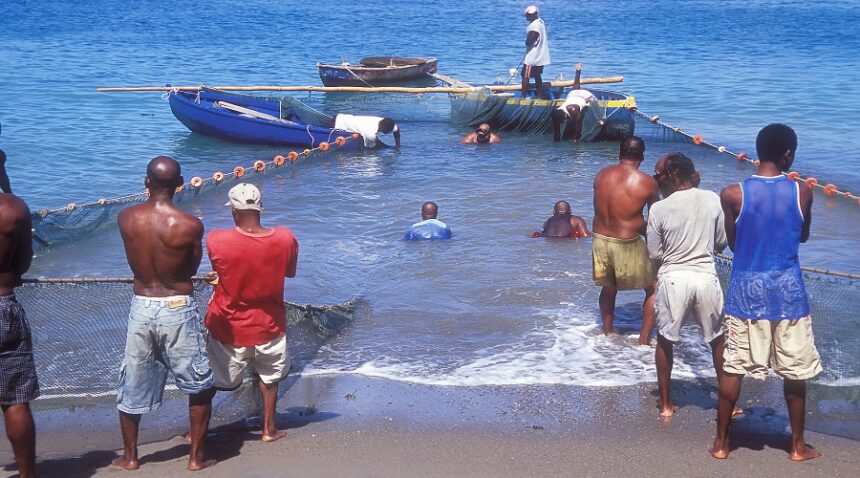
As of January 1, 2026, the United States has banned fish imports from Grenada. For the small island nation, this is a devastating blow. The fishing industry is not just a commercial enterprise; it is the lifeblood for over 3,000 people and a critical source of revenue, generating more than EC50 million (approx.US18.5 million) annually.
However, a deep dive into international assessments and government communiques reveals that the American action is not an isolated event, but a predictable reckoning for a long-running crisis of regulatory failure.
Long before Washington announced its ban, another global superpower had already delivered a damning verdict on Grenada’s fisheries. A remote assessment by the European Commission in late 2021 found Grenada’s entire control system for fishery products intended for the EU to be fundamentally broken.
The EU’s conclusion was unambiguous: the official control system “cannot and does not provide satisfactory guarantees” that European hygiene requirements are being met. The report identified sweeping, systemic failures across the board.
Key systemic failures identified by the EU:
• National laws do not cover all EU requirements.
• The competent authority lacks the legal power and written procedures to enforce rules consistently.
• The system for approving establishments and vessels is “inadequate.”
• Controls over the production chain and the products themselves are not implemented as planned and do not cover EU rules.
• A lack of reliable laboratory capacity undermines the entire system.
• Export certification is “severely impacted” by these shortcomings.
• Crucially, Grenada “systematically failed” to provide the required guarantees for issuing export certificates for one vessel, having issued certificates for a vessel that was not even EU-listed for the activity it carried out.
In response to the U.S. announcement on August 29, 2025, the Grenadian government scrambled into action. According to a press release from the Embassy of Grenada, the House of Representatives unanimously passed the Fisheries (Amendment) Bill on November 19, 2025, a piece of legislation specifically designed to comply with the U.S. Marine Mammal Protection Act.
But in a critical and counter-intuitive turn of events, this last-minute legislative push was not enough. Despite passing the new law and submitting a reapplication to the US authorities (NOAA) before the deadline, the ban still went into effect on January 1, 2026.
According to a January 5, 2026 report from NOW Grenada, local exporters are currently unable to ship any fish or fish products to the United States while the review of their application is pending
While the U.S. ban centers on marine mammals, the 2021 EU report exposed a more immediate threat: fundamental food safety gaps posing a direct risk to human consumers.
The European assessment found Grenada’s legal standards were not aligned with EU rules for contaminants like histamine and cadmium. More alarmingly, the country completely lacked standards for other potential toxins like tin and polycyclic aromatic hydrocarbons. Even the mandatory food safety programs (HACCP) that were in place were found to be superficial, “limited to certain minimal steps that do not adequately mirror the HACCP principles.”
Perhaps the most serious risk was the complete lack of specific measures to manage the public health threat from poisonous fishery products, “particularly relevant as certain local fish species are more susceptible to accumulate ciguatera.” The report stated that “no specific measures to manage this public health risk are in place, either at food business operators’ or competent authority level.”
The depth of the systemic failure is starkly illustrated by one damning detail from the EU report: official inspections simply were not being done.
The assessment found that in 2019—a full year before the COVID-19 pandemic disrupted global operations—no controls were carried out on any of the EU-listed land-based establishments, despite a legal requirement for annual inspections. In 2020, again, none were carried out.
The situation was just as dire at sea. Of the 40 fishing vessels involved in exports to the EU, only a single control was performed in 2019, and none at all in 2020. Furthermore, the report explicitly noted that “The five freezer vessels in the EU-list are not controlled.” This is shocking because it proves the breakdown in oversight was not a temporary consequence of the pandemic. It was a pre-existing condition, pointing to a fundamental and long-standing lack of enforcement capacity or political will. This chronic lack of oversight created the exact conditions for the marine mammal bycatch issues that would eventually trigger the U.S. ban.
Beyond the technical reports and policy debates are the lives and livelihoods of thousands of Grenadians. This is where the real cost of this crisis is felt, on the docks and in the fishing communities that depend on access to international markets. A quote from a local fisher, reported by WIC News, captures the painful human dimension of this regulatory collapse:
“This situation has gotten really bad. Our local fishing companies used to sell to buyers overseas, but now that’s stopped. We want to know why. We’ve always exported the freshest fish, so why can’t we ship it anymore?”
