

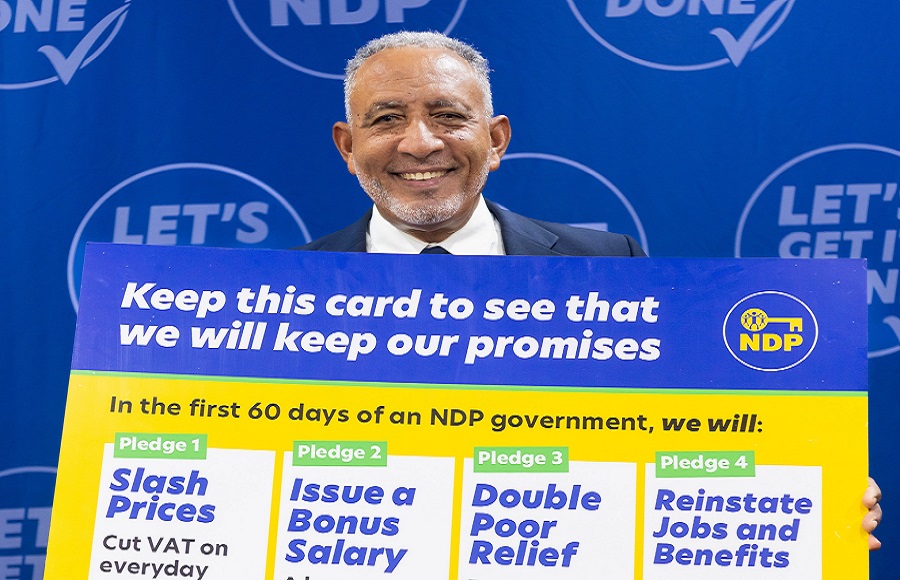
Following the conclusion of the 2026 Article IV Consultation, the International Monetary Fund (IMF) has delivered a clear message regarding the fiscal policies of St. Vincent and the Grenadines, “there is no room to lower the standard Value Added Tax (VAT) rate”. Instead, the international financial body recommends that the government eliminate the special VAT rate currently applied to the tourism sector and bring it in line with the standard national rate.
Speaking at a joint press conference with Prime Minister Dr. Godwin Friday, IMF Mission Chief Sergei Antoshin outlined the stark fiscal realities facing the island nation. Driven by pandemic recovery efforts, natural disasters, and recent global oil price shocks, the country’s public debt has surged, reaching 113% of GDP in 2025.
To combat this high risk of debt distress, the IMF is advising against broad tax cuts and is pushing for comprehensive tax reform. Alongside unifying the tourism VAT rate with the standard rate, the IMF welcomed the government’s ongoing efforts to expand VAT coverage to include digital and remote services.
Despite the recommendation to normalize its tax rate, the tourism sector remains a vital bright spot for the local economy. The IMF noted that the country’s recent economic growth was largely sustained by strong performances in the tourism and construction industries.
To ensure the tourism sector continues to thrive and to combat a local youth unemployment rate nearing 19%, the IMF highlighted the importance of addressing skill mismatches. The organization recommended expanding vocational education and providing targeted training specifically in tourism and construction to meet business demands.
Prime Minister Friday echoed the critical importance of the industry, identifying tourism, agriculture, and the blue economy as the primary “productive sectors” that will lead the country’s economic turnaround. He noted that tourism has seen “considerable growth in the past two or three years” and emphasized that the government is focused on attracting private sector investments to spur further development.
Both the IMF and the Prime Minister acknowledged the difficult path ahead. Prime Minister Friday noted that without a change in course, the national debt-to-GDP ratio could skyrocket to 145% by 2031. In response to the IMF’s recommendations, Friday committed to implementing a transparent, “homegrown economic stabilization program” aimed at reversing this trajectory, balancing fiscal responsibility with the need to protect the nation’s most vulnerable citizens.