


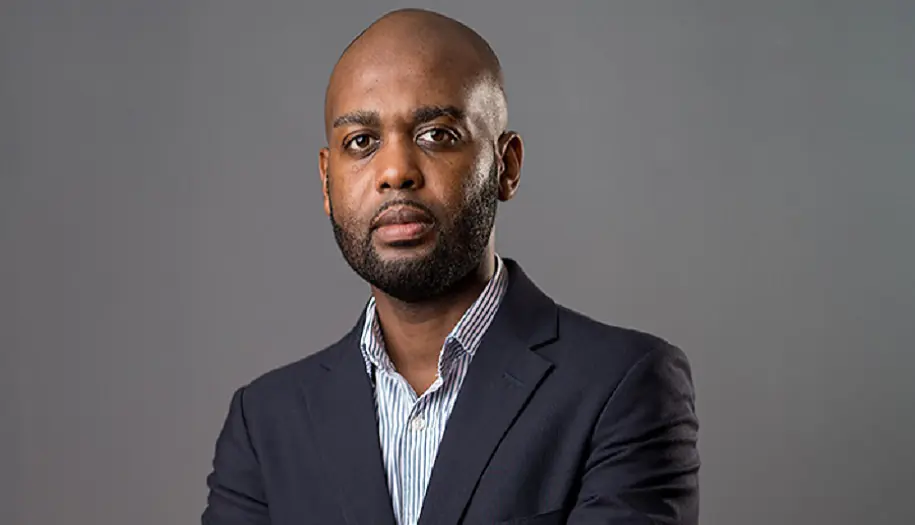
Response to the Gleaner Editorial:
The recent criticism directed at Dr. Kishore Shallow, President of Cricket West Indies (CWI) and Minister of Tourism and Maritime Affairs in St Vincent and the Grenadines, raises important questions about governance, ethics, and public perception. However, a closer and more balanced examination reveals that much of the argument against him is rooted more in optics and speculation than in evidence of wrongdoing or failure.
At the outset, it must be acknowledged that Dr Shallow remains the duly elected President of CWI. The organization’s shareholders, territorial cricket boards from across the Caribbean, are neither passive nor uninformed stakeholders. They have the authority and opportunity to act if they believe leadership is compromised. Their decision to retain Dr. Shallow is therefore not an oversight, but an indication of continued confidence in his leadership and direction.
Critics argue that his tenure has not delivered the sweeping reforms that West Indies cricket requires. Yet, such expectations often underestimate the complexity of regional governance. Cricket West Indies is not a single-entity organization; it is a coalition of diverse territorial interests, each with its own priorities. Transformational change in such an environment is rarely immediate. It demands negotiation, consensus, and stability. Incremental progress, though less dramatic, is often more sustainable.
On the issue of conflict of interest, the concerns raised deserve consideration, but not exaggeration. Holding dual roles in public service and sports administration is not unprecedented, nor is it inherently unethical. What matters is how those roles are managed. With proper systems of transparency, disclosure, and recusal where necessary, potential conflicts can be responsibly mitigated. To call for dismissal without evidence of misconduct risks elevating perception above principle.
Indeed, Dr. Shallow’s dual role can be seen as an advantage rather than a liability. As Minister of Tourism, he is well positioned to leverage cricket as a driver of economic growth through sports tourism, an area of increasing importance not only for St.Vincent and the Grenadines but other small island states. His leadership within CWI provides a bridge between national development goals and regional sporting opportunities. When handled with integrity, such alignment can benefit both St. Vincent and the Grenadines and the wider Caribbean.
Furthermore, calls for his removal from Cabinet raise broader concerns about governance and fairness in addition to motive. Public officials should be judged on their actions and performance, not on hypothetical conflicts or external pressure. To act otherwise sets a dangerous precedent, where perception alone becomes grounds for political sanction.
It is also worth recalling that leadership must be evaluated over time and within context. Dr Shallow assumed leadership in a challenging period for West Indies cricket, marked by financial constraints, performance inconsistencies, and long-standing governance debates. The absence of instant transformation should not be mistaken for inaction.
In the final analysis, the question is not whether concerns can be raised, they can and should be, but whether those concerns justify the conclusions being drawn. At present, there is no clear evidence that Dr. Shallow has breached ethical standards or failed in his duties in a manner that warrants removal from either office.
Leadership, particularly in the Caribbean context, demands balance, resilience, and a long-term view. Dr Kishore Shallow to whom i have had the privilege to work with as Secretary General, deserves to be assessed on measurable outcomes and integrity of conduct, not on conjecture or the politics of perception.