

More Than a Radar: Inside the Suspected US Military Base in Tobago
On the Caribbean island of Tobago, a place known for its tranquil bays and serene escapes, a different kind of activity is humming behind a 30-foot wall of steel—and a taller wall of official silence.
At the end of Kilgwyn Bay Road in Bon Accord, a US-installed radar facility at the ANR Robinson International Airport has become the epicenter of a growing storm of fear, suspicion, and political outrage.
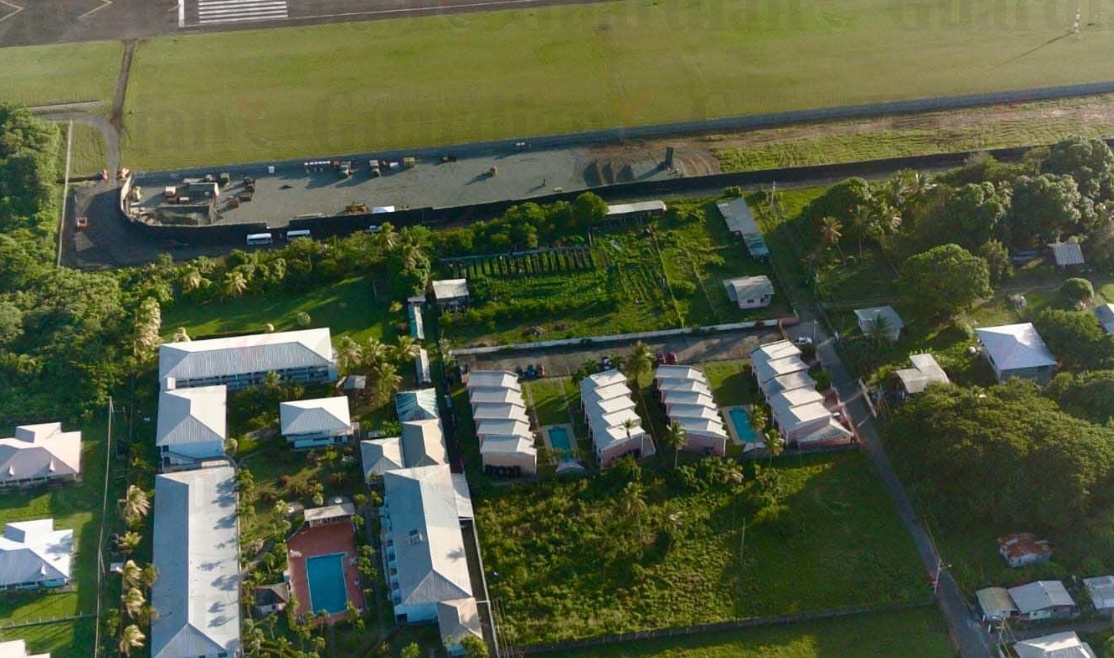
What was presented as a single piece of equipment now appears to be a significant, secretive, and heavily guarded operation. Drone footage and on-the-ground reports paint a picture of a compound shrouded in extreme secrecy, sparking alarm among political leaders and breeding anxiety in the local community. Into this information vacuum, anxiety and speculation have rushed in, fueled by the deafening silence from officials who should be providing answers.
What is actually happening behind the imposing fences of this compound? Here are the most concerning takeaways from recent findings, revealing a situation far more complex and alarming than a simple radar installation.
Drone footage of the restricted area reveals an active and occupied site. The images show not just the spinning AN/TPS-80 G/ATOR radar, but also “several trucks and utility vehicles” positioned within the compound. Furthermore, the presence of a “small tent,” another “temporary structure,” and “a number of portable toilets” suggests a significant and ongoing human presence.
These details contradict the notion of a simple, automated piece of equipment. Instead, they point to an operational hub requiring personnel for work and shelter, fueling powerful speculation that this facility is functioning less like a standalone instrument and more like a military base. This evidence of an active, manned operation makes the extreme secrecy surrounding it all the more alarming.
An imposing fortress of secrecy has been erected around the facility, enforced by both physical and psychological means. Access is blocked by a locked gate draped in black fabric, and the entire compound is enclosed by a “black, galvanised fence” that rises to “nearly 30 feet in height.” This is not the original barrier; after heavy winds toppled a much shorter fence, it was rebuilt at its current intimidating height, a deliberate escalation of fortification and secrecy.
This is not merely security; it’s a calculated strategy of intimidation. The 30-foot fence is a physical barrier, while alleged warnings to local businesses create a psychological one. One nearby business reported being “cautioned by military personnel to not allow guests into certain rooms that could have an access view to the cordoned-off facility.” This climate of fear has deputized the community into silence; when approached for a better vantage point, some residents declined, explaining they “feared that any images or video could be traced back to them.”
Interviewed in nearby Buccoo, Tobago’s political leaders reacted with a mixture of fury and fear. Ancil Dennis, the People’s National Movement Tobago Political Leader, did not mince words, calling the situation a profound insult to the island’s autonomy.
“It appears to me that somewhat of a military base has been established there…This level of disrespect, where we are seeing, based on that picture, what appears to be a military base established in our airport…Tobagonians have been endangered by this government in a very disrespectful manner.”
He further lamented the complete lack of information about the scale of the US presence, stating, “I am not even sure of the number of them here. I’m hearing talks of 200, some people saying 300, but we don’t know.”
The confirmation of an active site was deeply emotional for Dr. Denise Tsoiafatt-Angus, leader of the Innovative Democratic Alliance. Her reaction revealed a profound sense of betrayal: “Everybody else on the global market is discussing that Tobago is really a military base. But to actually have the confirmation is very depressing. Because you’re like, Oh my God, it’s real. It’s real!” Appearing “close to tears,” she added:
“It’s really shocking, stunning, frightening. I mean, those are all the fears I have going through now inside of me. As a Tobagonian, knowing that this has been done to us.”
Dr. Tsoiafatt-Angus speculated the radar is not for narco-trafficking but is a “missile interceptor and monitoring station” for a potential conflict between the US and Venezuela.
In the absence of any official explanation, public sentiment is a tangled “mixture of measured concern, confusion and indifference.” The desire for clarity was summed up by Pembroke resident Linda Murray: “Everybody wants to know what is taking place because it is happening on our island, and we are supposed to know what is taking place.”
