

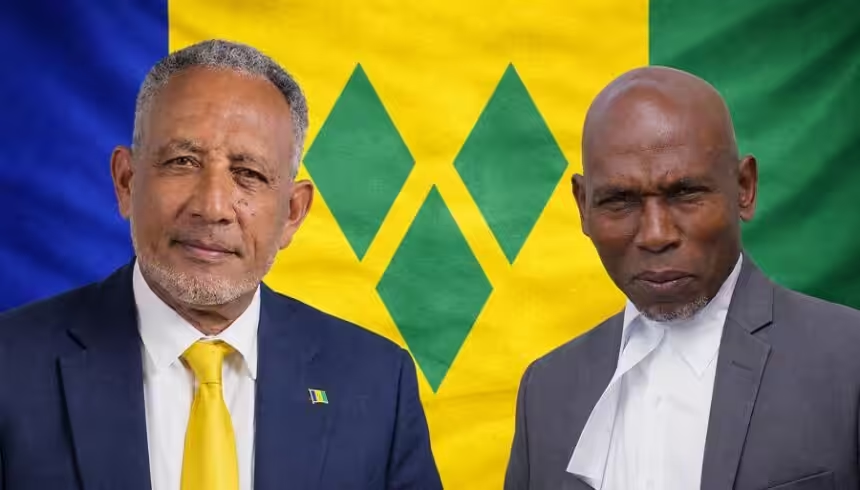
Political commentator and legal counsel Jomo Thomas is strongly advising the government of St. Vincent and the Grenadines to push back against recent economic policy recommendations from the International Monetary Fund (IMF). Speaking on the “OMG in the morning” radio show, Thomas asserted that the governing New Democratic Party (NDP) would be “foolish” to adopt the IMF’s policies wholesale.
Thomas criticized the IMF as an organization that does not have the developmental interests of countries in the global south at heart. He warned that implementing the IMF’s notorious austerity prescriptions would “put a greater squeeze on the people,” which is especially dangerous given the country’s high levels of poverty and unemployment.

Among the controversial suggestions from the IMF were utilizing Citizenship by Investment (CBI) funds strictly to pay off national debt rather than investing in capital projects, and relying on development banks—institutions that Thomas noted have a history of “dismal failure” across the Caribbean.
Furthermore, the IMF recommended that the government use targeted cash transfers instead of broad subsidies, a suggestion Thomas dismissed as a “prescription out of the air”. He argued that the government simply does not have the necessary funds to sustain cash transfers, alleging that the previous administration severely depleted state coffers by recklessly giving away millions of dollars borrowed from international funds to “buy the last election”.
Instead of following the IMF’s advice to maintain the Value Added Tax (VAT), Thomas strongly advocated for an immediate reduction in the 16% VAT to alleviate the financial burden on the poor. Calling the VAT “fundamentally a tax on the poor,” he suggested that the government should drop it to 14% immediately, with a potential further 1% reduction by Christmas. He emphasized that making a dollar go further for those with the least disposable income is a “positive and good thing”.
To generate revenue without squeezing the working class, Thomas commended Prime Minister Godwin Friday’s stance on vigorously collecting outstanding taxes from large corporations.
Thomas recalled that previous audits of major companies like Flow, Digicel, and Courts revealed that they were underpaying their fair share of taxes. By tightening collection procedures on these businesses, Thomas explained, the government can raise the necessary funds to patch roads, fix schools, and buy medicine.
Finally, Thomas dismissed attempts by former Prime Minister Ralph Gonsalves to use the IMF report as a political weapon to rally supporters of the Unity Labour Party (ULP).
Thomas argued that it is absurd for Gonsalves to capitalize on the report, noting that the dismal economic conditions highlighted by the IMF are a direct reflection of the mismanagement Gonsalves presided over for 25 years, not the fault of a new government that has only been in power for five months.
