
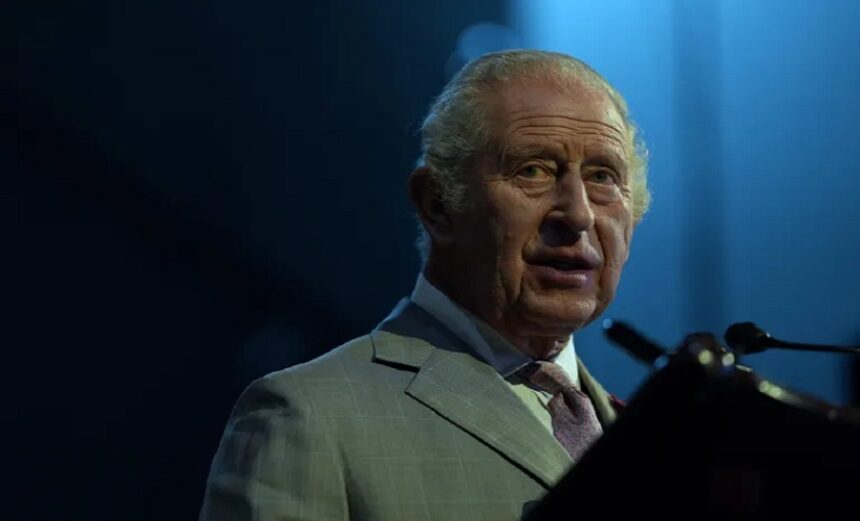
Buckingham Palace has formally signaled that it remains entirely open to Commonwealth realms removing King Charles III as their head of state if citizens decide they no longer wish for the monarchy to lead their nations. The clarification emphasizes a foundational principle within the royal household: the monarchy exists to serve only where its presence is actively desired by the public.
Speaking to The Times, a senior royal aide made the Palace’s stance unambiguous regarding potential constitutional transitions across member states:
“The King and the royal family are there to serve the people of these regions for as long as they wish. But if they don’t wish it anymore, then we really are fully open to that. The family serves when it’s wanted and if not, then a new arrangement can be found.”
The aide added that the royal household maintains “absolutely no difficulty” with member countries charting their own sovereign paths, reiterating that any decisions regarding national governance rest entirely with the citizens and leadership of each respective realm.
An official spokesperson for Buckingham Palace reinforced this position in statements reported by The Independent, clarifying that choices regarding national sovereignty have long been recognized by the Crown as the exclusive prerogative of individual nations:
“It has long been the Palace position that it is up to individual Commonwealth realm nations to determine what is right for them in matters of sovereignty. His Majesty is delighted and honoured to serve as Head of State for as long as they may wish, but equally supportive if they choose a different path.”
The Palace’s declarations follow the conclusion of a complex and demanding nine-day royal tour of the Caribbean undertaken by King Charles III. Spanning three countries and numerous public engagements, the visit took place against a backdrop of intensifying debates over the historical legacy of the transatlantic slave trade and growing calls across the region for formal apologies and financial reparations from the United Kingdom.
During a major address launching a Commonwealth summit at the culmination of the trip, King Charles addressed the history of slavery directly, stating that the transatlantic slave trade “fills my heart with horror and my soul with the most profound personal sorrow.” While expressing deep personal regret, the King did not offer a formal state apology during the summit address.
Reflecting on the tour’s dynamics, Palace officials characterized the nine-day itinerary across three countries as challenging and exhausting, yet ultimately successful in demonstrating royal statecraft:
Demanding Itinerary: The visit involved intensive scheduling across three nations in high heat, marked by sensitive diplomatic discussions and political conversations.
Diplomatic Statecraft: Palace aides noted that the King relishes the demanding aspects of his role and remains dedicated to strengthening relationships where complex political issues are at play, describing the monarch as a “great secret weapon” in diplomatic outreach.
Balanced Line: Officials emphasized the necessity of navigating a careful line between UK government policy and the distinct constitutional role of the monarch.
In detailing the royal household’s perspective on constitutional change, Palace representatives highlighted that transitions from realms to republics represent a normal, established process within Commonwealth history rather than a breach of bilateral relations.
The following table synthesizes the historical precedents and official Palace posture regarding sovereign transitions within the Commonwealth:
| Transition Parameter | Historical Precedent Details & Institutional Position |
|---|---|
| Recent Transition Benchmark | Barbados (2021): Cited by Palace officials as a model transition executed with mutual respect and without rancour. King Charles attended the transition events, and Barbados remains a supportive Commonwealth member. |
| Reign of Queen Elizabeth II | 17 Nations: A total of 17 countries successfully transitioned from realms to republics during the reign of the late Queen, demonstrating long-standing precedent. |
| Institutional Stance | Standard Practice: Palace statements emphasize that such shifts are neither novel nor unprecedented, representing routine exercises of national self-determination. |
A Buckingham Palace spokesperson pointed directly to the 2021 transition of Barbados as evidence that constitutional restructuring does not diminish ongoing partnership within the Commonwealth family:
“When the nation decided it wanted to change to a republic, His Majesty was delighted to go along to events which marked its transition, and of course it very much remains a supportive member of the wider Commonwealth family, alongside other nations that have followed the same path. There is actually nothing unusual in this… It’s simply a matter of what countries want to do, and what is right for them.”
The Palace also addressed reports regarding political coordination between royal officials and the UK government during the Caribbean visit. Officials firmly denied suggestions that the royal household was blindsided by the UK Prime Minister’s decision to express openness to apologizing for Britain’s role in the transatlantic slave trade in an op-ed.
A Palace source confirmed direct communication between royal aides and the Prime Minister prior to the publication of the op-ed, affirming that Downing Street acted entirely within its entitlement and with full advance awareness from the royal household.
Ultimately, the Palace’s declarations affirm that while King Charles remains honored to serve as head of state across Commonwealth realms, the Crown stands ready to respect and support whichever constitutional direction member nations choose to pursue.