

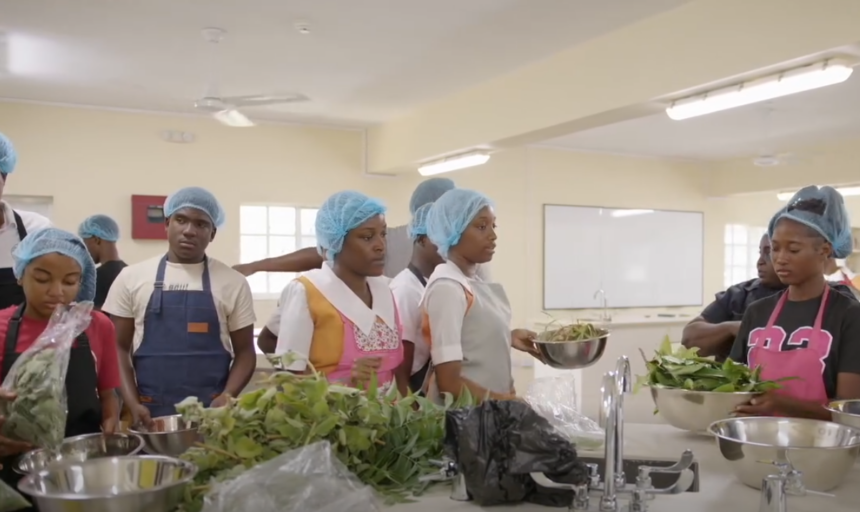
St Vincent Technical College is proud to announce the formal launch of its state-of-the-art Agri Food Lab, marking a transformative milestone for vocational education in St. Vincent and the Grenadines.
As the first program of its kind in the nation, the lab serves as a strategic hub for scientific discovery and industrial application, bridging the gap between traditional agriculture and modern food technology. This initiative is designed to redefine the local agricultural landscape, moving beyond raw crop production toward high-value, tech-driven agro-processing.
The college’s flagship “Certificate in Agri Food Science” offers a rigorous, multidisciplinary curriculum that professionalizes the local food sector. Students are immersed in critical disciplines, including food chemistry, microbiology, and advanced food processing.
Currently, the program has successfully enrolled an inaugural cohort of 13 students in a one-year intensive course.
At the heart of the Agri Food Lab’s curriculum is a focus on Quality Assurance (QA), identifying it as the essential linchpin for successful market entry and export readiness.
Through a dedicated course titled “Quality Assurance and Testing,” students master the complexities of consistency and food safety. Training includes the development of rigorous Standard Operating Procedures (SOPs), detailed production flowcharts, and strict sanitation protocols for both workspaces and raw materials.
By utilizing precision technology, the program removes the “guesswork” of traditional production. For example, when processing passion fruit for wine, students learn that sugar content (Brix) can vary significantly between harvests—from 16% down to 10%. By using modern testing tools, students can adjust formulations scientifically to ensure every product meets a standardized profile, ensuring the consistency required for commercial scalability.
The Agri Food Lab operates under a “Zero Wastage” philosophy, teaching students to identify high-value opportunities in materials often discarded by traditional processors. This mandate transforms raw local ingredients into diverse, nutrient-dense secondary products, diversifying the nation’s agricultural output.
A primary example is the lab’s sorrel production line: after creating liqueurs, the remaining petals are dehydrated and ground into fine powders for juice mixes or infusions. Similarly, the pulp remains of golden apples used for wine production are converted into powders suitable for gourmet culinary applications.
This approach extends to root crops—including dasheen, sweet potato, and sweet cassava—as well as nutrient-dense tree crops like Moringa. These innovations serve as proprietary brand formulations, providing a direct blueprint for student-led small businesses and niche market exports.
Under the leadership of lecturer Mishka Edwards, the college is championing a strategic pivot toward “Gastronomic Tourism.” Recognizing that modern travelers seek authentic, island-specific culinary experiences, the program prepares students to capitalize on this trend by producing specialized items like golden apple, dragon fruit, and Plumrose and Damson wines. Proprietary tea blends, such as “Citrus Rush” and “Salsa Silk,” allow students to offer unique tastings that drive significant economic value.
The program offers a dual-track career path designed for maximum economic impact:
1. Entrepreneurship: Empowering students to launch boutique brands for the luxury hotel and tourist markets.
2. Industrial Integration: Preparing students for immediate employment as food technologists or quality assurance assistants at established entities such as the Bureau of Standards, the Distillers and Growers Co-operative (DGC), Eastern Caribbean Bottlers Inc. (ECBI), and Vincyfresh.