
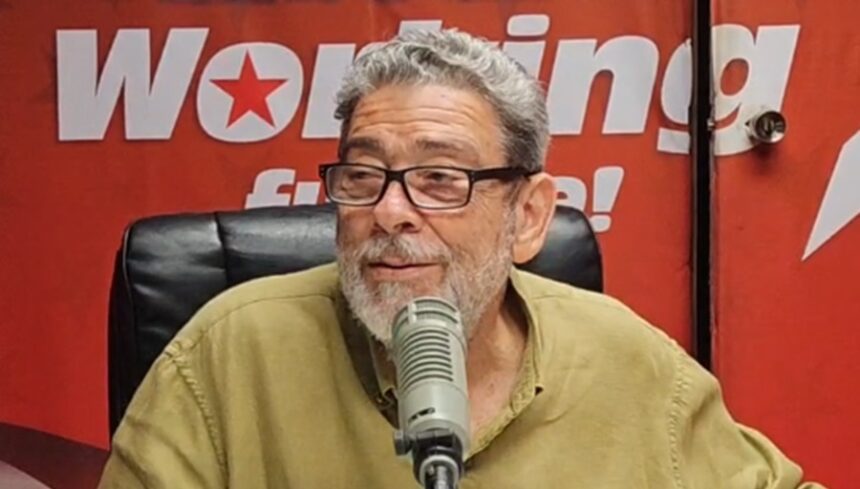
Opposition Leader Dr. Ralph Gonsalves has launched a blistering critique of the New Democratic Party (NDP) administration following the recent decision by Moody’s Investors Service to downgrade St. Vincent and the Grenadines’ credit rating to its lowest level in history.
In an extended address, Gonsalves argued that the shift to a CAA1 rating signifying “poor quality” and “very high credit risk” is a direct consequence of the new government’s “reckless” 2026 budget and its “active exploration” of debt restructurings that markets view as a potential default.
Gonsalves dismissed claims from the NDP that the downgrade was the result of long-term mismanagement under the previous Unity Labour Party (ULP) administration. He pointed out that for a decade, between 2016 and 2025, the country maintained a B3 stable rating despite facing the COVID-19 pandemic, volcanic eruptions, and Hurricane Beryl.
According to Gonsalves, Moody’s was fully aware of the country’s debt stock, which had been repeatedly identified in earlier reviews without triggering a downgrade. He noted that as recently as December 2025, one month after the NDP took office, Moody’s reaffirmed the B3 stable outlook. The “critical change,” Gonsalves argued, was not the discovery of “old problems” but Moody’s assessment of the new administration’s policy direction and market signals.
The Opposition Leader identified three primary factors within the NDP’s first eight months that he believes triggered the rating action:
- The 2026 “Austere yet Reckless” Budget: Gonsalves highlighted a current account deficit of 103 million representing 19. He further criticized the decision to seek 200 million in local market borrowing at high interest rates (up to 7.25%) rather than utilizing more affordable concessional loans.
- The “Spectre of Debt Default”: Gonsalves accused Prime Minister Dr. Godwin Friday and his team of “spooking the market” with loose talk about unsustainable debt and “debt swaps”. He cited the Moody’s report, which suggested the government’s active exploration of these swaps included the possibility of a restructuring that would “constitute a default”.
- The Absence of a Growth Strategy: For the first time in recent memory, Gonsalves claimed, a Moody’s report on the country contained “no discussion whatsoever of SVG’s economic prospects or the NDP’s plans for growth”. He argued that while previous reports balanced debt concerns with a “convincing growth story” involving tourism and infrastructure, the latest review focuses solely on rising debt and liquidity pressures.
Gonsalves was particularly critical of the government’s shift toward the commercial market, comparing their strategy to someone using “quick cash” companies with high interest rates rather than a bank. He claimed the NDP has already struggled to raise the necessary funds, securing only $52 million of the projected $200 million while being forced to accept shorter repayment periods.
He further alleged that the government is pursuing “unnecessary” expansions to projects, such as the acute care hospital at Arnos Vale, purely for “vanity”. These changes, he claimed, could add nearly $200 million (EC) to the project’s cost without an identified source of funding, further straining the national treasury.
The Opposition Leader warned that the “negative outlook” attached to the CAA1 rating suggests further trouble ahead. He argued that the downgrade would make it harder and more expensive for the government to borrow money, ultimately hurting ordinary citizens who are already feeling a “slow” economy on the ground.
“Moody’s was listening when they were talking down the economy for political purposes,” Gonsalves stated. “This is precisely what I warned would happen—you have spooked the investors, and now we are in high-risk territory”.