

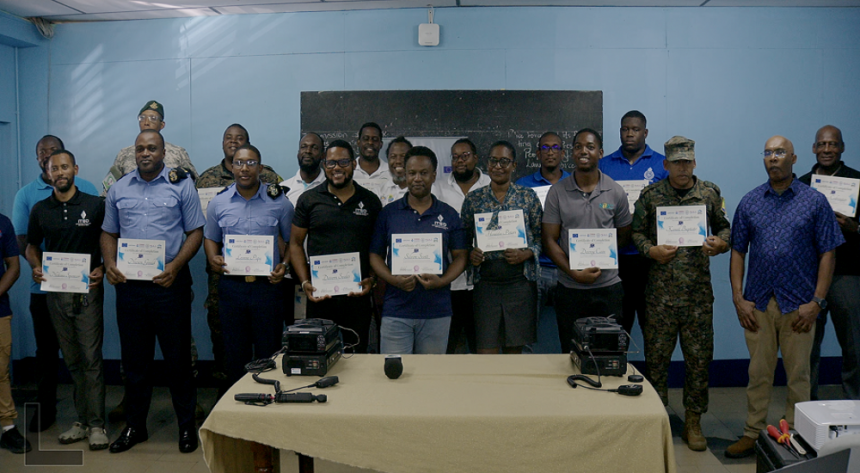
The National Emergency Management Organisation (NEMO) of St. Vincent and the Grenadines successfully concluded an intensive five-day High Frequency Equipment Installation and Training Workshop last Friday. The closing ceremony for the event was held at the Police Training School Headquarters in Old Montrose, Kingstown.
The “Training of Trainers” programme, which ran from June 15 to 19, 2026, was organized by NEMO in partnership with the Caribbean Disaster Emergency Management Agency (CDEMA). Funded through the CDEMA BRICS Programme, the workshop was implemented under a broader regional initiative known as the Upgrade to National Disaster Offices High Frequency Communications Project.
During the closing ceremony, Courtney King, CDEMA’s Senior Programme Officer for Telecommunications, highlighted the critical need to strengthen emergency communication capacities across the Caribbean. King described the week-long training as highly rigorous, noting that participants gained hands-on experience with the internal components of radio systems, including their assembly and disassembly.
“We also explored radio programming in depth, ensuring that participants understand how to programme the radios for different applications and build larger communications networks in the future,” King stated.
Kenston Stoddard, Deputy Director of NEMO, also addressed the attendees, emphasizing the indispensable role these upgraded systems play in disaster response. Stoddard pointed out that the Sustainable Development Goals recognize early warning systems and emergency communications as a “force multiplier” in crisis management.
“They are the cornerstone of our response, preparedness, and actions during emergencies,” Stoddard told the gathering, adding that such mechanisms ultimately leave disaster management teams “better able to save lives”.
The St. Vincent and the Grenadines workshop is a key component of ongoing efforts to elevate disaster management capabilities and unify high-frequency communication networks among national disaster offices throughout the wider Caribbean region. The event concluded with the newly trained participants being awarded certificates to recognize their successful completion of the programme.