
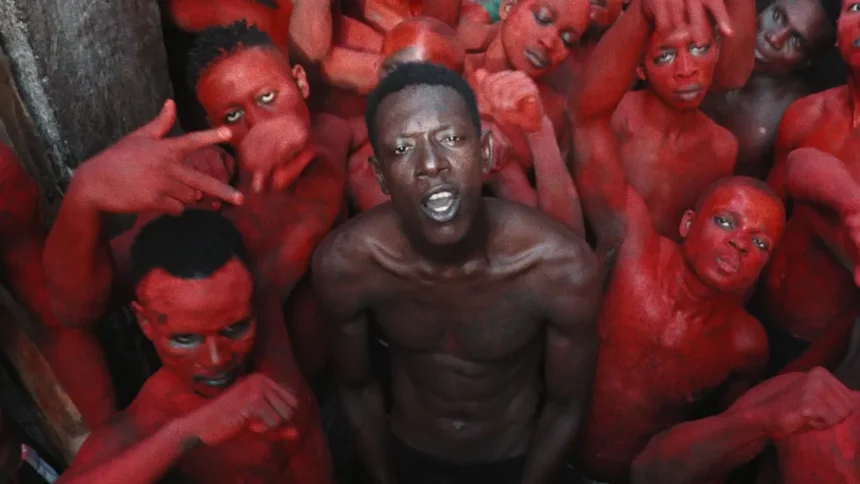
Within the crumbling, overcrowded walls of New Bell, a notorious prison in Douala described as a “city within a city,” an unlikely sound is emerging: the pulse of a professional music studio.
Jail Time Records, an on-site record label and recording studio founded in 2018, is transforming some of Cameroon’s most feared inmates into international creative figures. What began as a rudimentary setup—a sweaty recording booth and a single computer—has now evolved into a global phenomenon, garnering fans from South Africa to Argentina and winning top honors at the Tribeca Film Festival.
New Bell is known for its harsh, often lethal environment. Designed for 1,100 people, it currently houses 4,700 prisoners, leading to unsanitary conditions where cholera outbreaks have claimed lives. The facility operates with its own internal economy, including “taxis”—inmates who deliver messages on foot—and its own marketplace.
Amidst this “bitter environment,” Jail Time Records offers what co-founder and former inmate Steve Happi calls an “instrument of resistance”. “We don’t think anymore about the four walls—we find the freedom,” Happi told the BBC.
The label has already produced several “mini stars”. One of its most successful artists, Empereur, a leader of gangs both inside and outside the prison, has seen the music video for his song “Sa Ngando”—filmed entirely behind bars—reach 24,000 views on YouTube.
Another artist, Stone, a former soldier in the presidential guard serving 10 years for robbery, uses his music to process his separation from his young daughter. His track, “Heart of Stone,” features high production value and includes fellow inmates as actors and crew.
The label’s reach has also extended to the women’s wing, where its first female artist, Jeje, recorded the Afrobeats song “Show Me The Way” after being jailed for fleeing an allegedly abusive relative.
The project’s impact has caught the attention of Hollywood. A documentary titled Jail Time Records, executive produced by Oscar-winning director Taika Waititi and singer Rita Ora, recently won three prizes at New York’s Tribeca Film Festival, including best documentary feature.
Waititi emphasized the importance of the project, stating, “Having an outlet is an incredibly powerful and humane thing” for people who may be imprisoned for life.
While some critics question if the project glorifies criminals, co-founder Dione Roach maintains that the focus is strictly on rehabilitation. “Music… is also a way of self-discovery… coming to terms with things you’ve done and hopefully changing for the better,” she explained.
The success of the New Bell studio has prompted Roach and Happi to expand. In 2023, they opened a new studio 1,000 miles away in the central prison of Ouagadougou, Burkina Faso.
The prison authorities in Cameroon have remained supportive, with the head of New Bell even attending and dancing at a recent large-scale concert held in the prison courtyard. For the inmates, the music remains a “lantern for a brighter future,” helping them feel they still have a place in society despite their surroundings.