

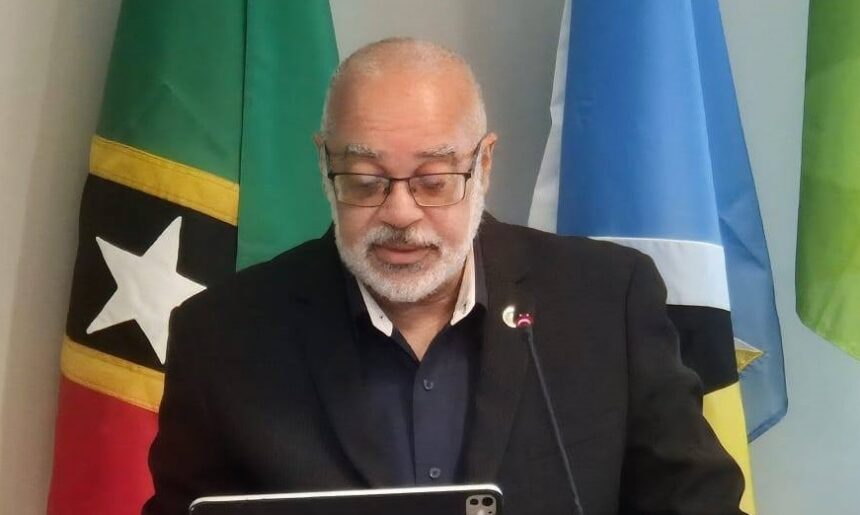
Moving “beyond analysis and toward action” was the mandate delivered to foreign ministers at the 9th OECS Council of Ministers meeting. A key proposal on the table is the establishment of a shared diplomatic platform and the restructuring of joint OECS missions.
According to Director General Dr. Didacus Jules, the current diplomatic architecture is constrained by fragmentation and limited capacity. In an era where global influence is driven by sustained presence and alliances, he argued that the OECS cannot afford to operate as “disconnected nodes”.
A unified presence would ensure that the OECS speaks with clarity, consistency, and credibility. Prime Minister Dr. Godwin Friday fondly recalled a time when the region shared common representation in Ottawa, Canada, lamenting that such unified representation is no longer in place.
The council’s agenda also tackled pressing regional crises, particularly the instability in Haiti and Cuba.
Minister Fitzgerald Bramble emphasized that these situations are not “distant news” but lived realities that test the region’s governance and solidarity. Dr. Jules added that instability does not respect borders, insisting that the regional response must balance “solidarity with prudence and principle with realism”.
Other critical agenda items targeted for concrete decision-making included:
- Geopolitical diversification: Building strategic relationships with Africa, Asia, and the European Union to reduce vulnerabilities and expand the region’s room to maneuver.
- The Eastern Caribbean Liaison Service (ECLS): Regularizing the service, which operates in Canada to facilitate opportunities for agricultural farm workers.
- Free Movement of Persons: Ensuring the legal architecture translates into a “seamless, dignified, hassle-free” travel experience for citizens across the region.
Minister Bramble urged accountability, reminding ministers that their choices directly shape the daily lives of the Eastern Caribbean people.
