


Brent jumped by as much as 13% to above $82 a barrel at the open on Monday, and oil markets are now bracing for prolonged volatility and sustained disruptions in the Strait of Hormuz.
Tanker traffic through the strait effectively stalled over the weekend as US and Israeli attacks on Iran escalated into a regional conflict.
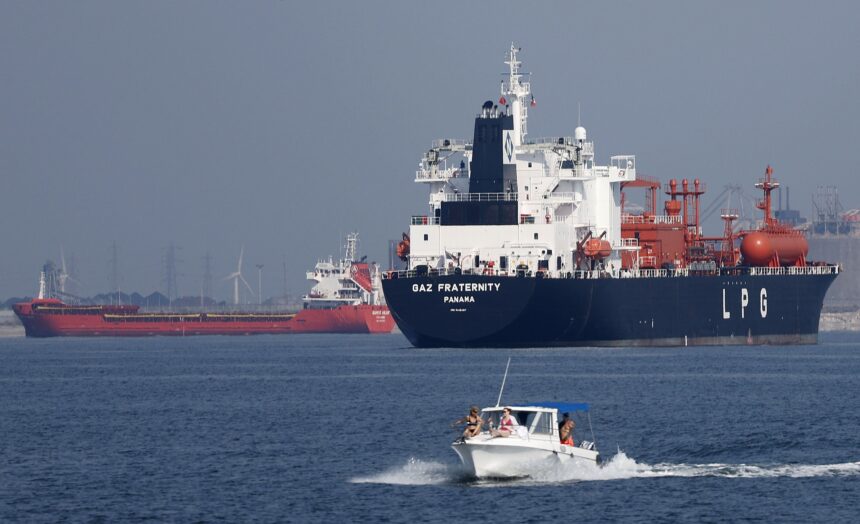
About a fifth of the world’s oil and liquefied natural gas typically flows through Hormuz each day. Iran said the waterway remains open, but it also claimed responsibility for attacks on three oil tankers on Sunday. Shipowners have largely halted traveling through the chokepoint after the US declared a maritime warning zone.
Meanwhile, Saudi Aramco has halted operations at its Ras Tanura refinery in Saudi Arabia after a drone strike in the area, according to people familiar with the matter. The refinery, located on the Persian Gulf, can process 550,000 barrels of crude per day and is one of the largest in the country. ICE gasoil futures surged as much as 20%.
Citigroup Inc. raised its short-term Brent forecast by $15 a barrel to $85. The bank expects the global benchmark to trade between $80 and $90 this week due to persistent risk to energy infrastructure and “disrupted” flows through the Strait of Hormuz.
“Our baseline view is that the Iranian leadership changes, or that the regime changes sufficiently as to stop the war within 1-2 weeks, or the US decides to de-escalate having seen a change in leadership and set back Iran’s missiles and nuclear program over the same time frame,” analysts including Francesco Martoccia and Max Layton said in a note.
If regional oil infrastructure gets hit, prices could rise as high as $120 a barrel, said Citi, assigning a 20% chance to this scenario.