

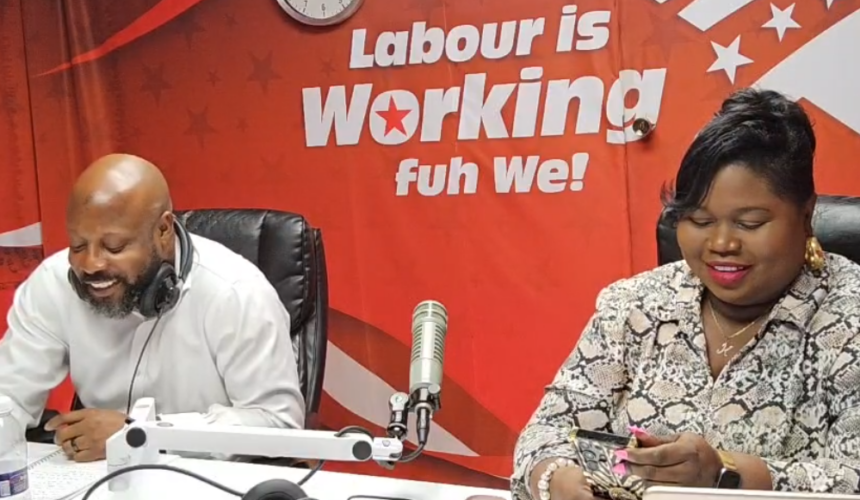
As the global political and economic landscape grows increasingly volatile, small island developing states face immense vulnerabilities. Recent discussions by hosts Carlos James and Kissell Melissa Peters on Star Radio’s “On the Record” highlighted the pressing need for robust national preparedness in St. Vincent and the Grenadines amidst looming global economic shocks.
The ongoing war in the Middle East and the Gulf region is projected to have severe knock-on effects on the global and local economy. The most immediate threats include an exponential increase in the cost of shipping and a protracted period of inflation. These geopolitical conflicts create a ripple effect that will inevitably lead to spikes in the cost of fuel, electricity, transportation, and raw materials. For instance, increases in the price of imported wheat, flour, and propane will directly raise the cost of basic commodities like bread.
Furthermore, environmental challenges continuously compound these economic shocks. Protracted periods of drought and worsening annual hurricane seasons directly threaten agricultural output and infrastructure. Because small island developing states operate without vast natural resources such as oil, bauxite, or gold, their economies are highly sensitive to these external global pressures.
Concerns Over National Preparedness Despite the clear horizon of economic difficulty, there is growing concern that the current administration under the New Democratic Party (NDP) is failing to adequately prepare the nation. While the government has publicly acknowledged that prices on store shelves and at the gas pumps will rise, they have failed to articulate a comprehensive strategy to cushion the blow.
Key areas of concern regarding national preparedness include:
Lack of Coordinated Task Forces: There has been no establishment of a joint task force bringing together the public sector, private sector, the Chamber of Industry and Commerce, and the Ministry of Trade to proactively tackle the rising cost of doing business.
Threats to Food Security: The Ministry of Agriculture has remained silent on plans to ramp up local food production. To prepare for an increasing food import bill, experts argue the government must urgently pool resources to provide farmers with vital equipment like irrigation tanks and drip lines.
Absence of Proactive Leadership: The current government has been criticized for operating in isolated “silos,” characterized by silence and a lack of unified planning. The Prime Minister has been described as “absent-minded in thought and planning” regarding how to navigate these approaching tidal waves.
During their campaign, the current government proposed a “60-day plan” explicitly designed to tackle the cost of living crisis, which prominently featured a promise to slash Value Added Tax (VAT) from 16% to 13%. However, as the cost of living crisis worsens, government officials have reportedly denied making these swift promises and have recanted on the tax reduction.
Furthermore, national preparedness requires robust social safety nets for the most vulnerable. Yet, recent national budgets have reportedly seen reductions in allocations for the Ministry of Social Development and national housing projects. With inflation set to push more citizens toward indigence, there are grave concerns that the government’s reduced social spending will leave many vulnerable—including those whose homes were destroyed by recent natural disasters—without adequate protection.
To survive these economic shocks, analysts and former leaders stress the need for a cohesive, people-centered approach. Former Prime Minister Ralph Gonsalves has suggested that St. Vincent and the Grenadines must aggressively tap into multilateral relationships, such as the Caribbean Development Bank (CDB), and leverage bilateral partners like Taiwan for strategic technological advancements.
Additionally, instead of relying on broad VAT cuts that retailers may not pass on to consumers, an effective preparedness strategy should involve zero-rating essential consumable items, adult pampers, and pharmaceuticals to directly protect the working class.
Surviving the impending economic shocks requires immediate, harmonious collaboration across all productive sectors—including tourism, agriculture, and manufacturing—to stimulate job creation and ensure that the nation’s greatest resource, its people, remains protected.