
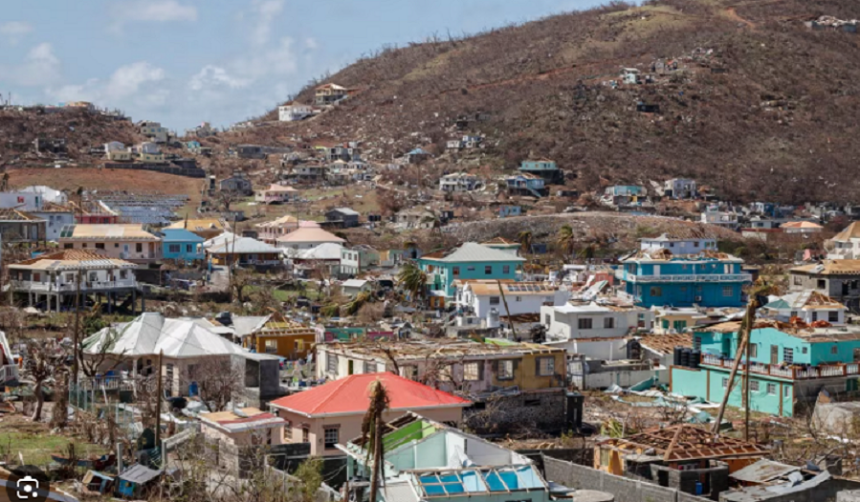
Serious concerns are being raised across Saint Vincent and the Grenadines regarding the state of the national housing sector, as post-disaster recovery efforts stall, state assistance declines, and displaced storm victims face eviction from government shelters.
During recent public and parliamentary deliberations, commentators highlighted that state support for housing assistance has become almost non-existent due to insufficient funding allocations. The Minister of Housing reportedly admitted in Parliament that estimates approved in the national budget were inadequate to handle the scale of repair and recovery required following Hurricane Beryl and the volcanic eruption.
Critics contend that decision-makers slashed the housing budget despite knowing the full magnitude of the disaster damage.
The housing crunch is acutely affecting displaced citizens residing in state-run emergency shelters across both the mainland and the Grenadines, including facilities in Buccament, Barrouallie, Rillan Hill, and Union Island. Reports indicate that shelter occupants are receiving notices from officials instructing them to vacate government accommodation immediately.
Although these displaced residents were previously assured that their homes would be repaired or rebuilt by the state, visiting officials have informed them that the government cannot provide building materials or housing construction support. Public commentators called on the National Emergency Management Organisation (NEMO), the Ministry of Housing, and the Ministry of Social Welfare to address the matter transparently and assist with proper relocation rather than quietly forcing vulnerable families out.
Radio discussions also pointed to a major reduction in state home construction rates. Under the current administration, home construction has reportedly slowed to an average of just two houses per quarter per constituency.
This marks a steep decline from previous housing programs, which delivered over a dozen home repairs per week and a dozen new constructions per month in some constituencies, alongside targeted low- and no-income housing projects to resolve informal settlements across the islands.