

Communication Breakdown?
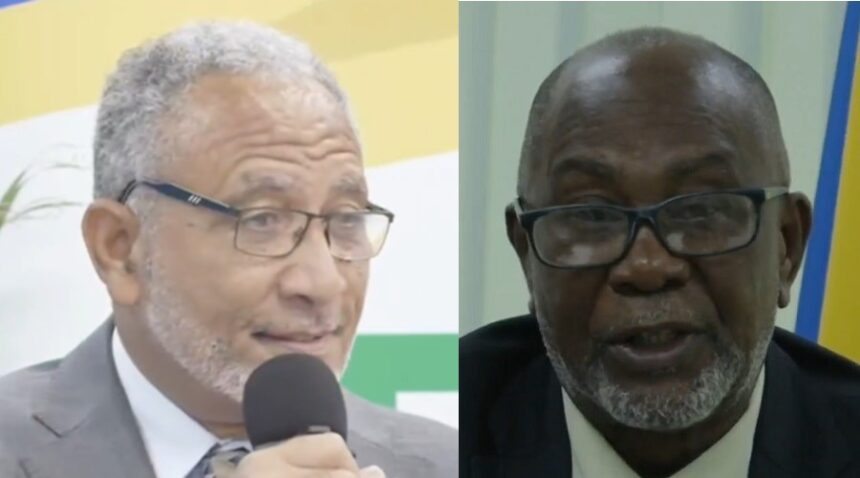
A significant lack of coordination within the government was highlighted this week when the Prime Minister and the Deputy Prime Minister held major public events at the exact same time.
While the Prime Minister was delivering a feature address at a scheduled event broadcast live by the Agency for Public Information (API), the Deputy Prime Minister who also serves as the Minister of National Security held a simultaneous press conference.
Critics and observers have characterized this overlap as a “new phenomenon” that raises serious questions about the respect and courtesy afforded to the office of the Prime Minister.
Former Prime Minister Ralph Gonsalves noted that the scheduling conflict suggests the two leaders are “not coordinating” and “not talking” to one another.
The Deputy Prime Minister’s press conference reportedly concerned the assumption of the chairmanship of the Regional Security System (RSS).
Gonsalves dismissed the urgency of this announcement, noting that the RSS chairmanship is a rotational position—famously described in cynical literature as “Boggin’s turn”—and argued the news could have easily waited until the following day or week.
He further suggested that if the matter were truly “shattering,” the Prime Minister should have been the one to make the announcement rather than being upstaged by a concurrent briefing.
This apparent dysfunction is believed to have broader implications for the country’s governance.
Such a visible lack of communication between the nation’s two highest offices may negatively impact the cohesive functioning of the government, potentially hindering efforts to address critical issues like crime and social disorder.
Reflecting on past administrative protocols, Gonsalves remarked that in previous years, ministers would actively coordinate their schedules to avoid such conflicts.
He noted that if a minister discovered a scheduling overlap with the Prime Minister, they would typically call to discuss moving their event to a different time or day to ensure a unified government presence.
The current situation, he argued, indicates a deeply problematic level of administrative dysfunction