

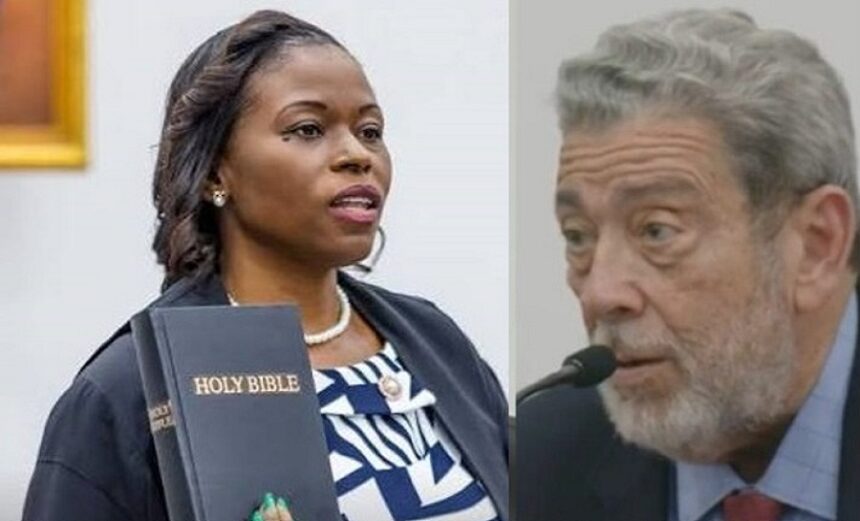
Opposition Leader Dr. Ralph Gonsalves has sharply criticized the Speaker of the House of Assembly and the ruling New Democratic Party (NDP) administration over the rejection of key parliamentary questions regarding government borrowing and mounting fuel debts.
Speaking on national radio, Gonsalves revealed that the House of Assembly deemed two of his formal questions for oral answer “inadmissible” under Standing Order 22. According to notice received from the assembly, the Speaker ruled that the submissions constituted an “abuse of the right of questioning” and were “frivolous to repeatedly ask the same question on the same topic despite the adjusted time period”.

Gonsalves strongly rejected the ruling, accusing the parliamentary leadership of misapplying procedural rules to shield the administration of Prime Minister Godwin Friday from public transparency amidst growing national economic strain.
To demonstrate that his queries addressed urgent, evolving fiscal matters, Dr. Gonsalves read the exact text of the rejected questions during his broadcast:
Government Borrowing and Local Loans: Gonsalves sought details on any local loans contracted by the government since the last parliamentary sitting on August 27, 2026. The question requested the specific lending entities, interest rates, and amortization periods. Gonsalves argued that with $200 million budgeted for local loans and $52 million previously raised, the public has a right to know if the state is turning to state entities like the National Insurance Scheme (NIS), National Properties, or the National Lotteries Authority to cover public sector salaries.
Fuel Debt Obligations: The second question asked the Minister of Finance to disclose the current total indebtedness of the government to fuel suppliers Rubis and Sol under the national petroleum price control system. Gonsalves noted that while the government previously acknowledged owing $17 million to Saul as of August 27, escalating global crude and diesel prices—with Brent crude climbing above $174 per barrel—have likely pushed total liabilities beyond $20 million.
Gonsalves contended that classifying updated financial inquiries as “frivolous” undermines the constitutional oversight role of the opposition. He alleged that the government blocked the queries because the answers would expose severe cash-flow shortages, stagnant economic growth, and rising borrowing costs.
“You’re trying to block me asking questions, and you’re wondering why is it that there is anxiety and chaos in the country?” Gonsalves stated, arguing that the administration is concealing the true state of public finances.
He further highlighted that other opposition parliamentarians submitted numerous oral and written questions on key public issues—including government spending, offshore land developments, public sector employment contracts, and social welfare cuts—demanding that the Speaker uphold equal rights of parliamentary inquiry.
Despite the rejection of his questions in the House of Assembly, Dr. Gonsalves vowed to continue presenting his financial analysis directly to the public.
“You could stop me from asking me in the parliament, but then the people would know that you have something to hide,” Dr. Gonsalves declared, asserting his constitutional right to use national media platforms to hold the government accountable.