


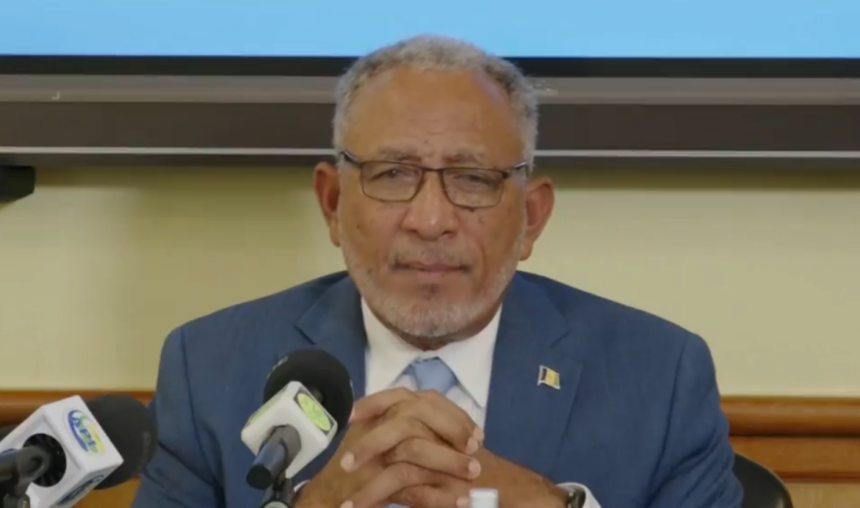
In a national address marking the official start of the 2026 hurricane season on June 1st, Prime Minister Friday urged the citizens of St. Vincent and the Grenadines to heighten their vigilance and prepare for potential weather hazards. Emphasizing that “disaster management is a shared responsibility,” the Prime Minister outlined extensive government preparations while issuing a clear five-point plan for households and communities.
The onset of the 2026 hurricane season comes at a uniquely challenging time for the nation. Prime Minister Friday noted that parts of St. Vincent and the Grenadines are currently enduring a severe and prolonged drought, a stark reminder of the realities of global warming. The Met Office reported a steady decrease in annual rainfall over the past eight years, with 2025 suffering the poorest rainy season on record and breaking previous low-rainfall records set in 2022.
Furthermore, the Prime Minister highlighted that the country is facing multiple natural and man-made hazards with limited disaster recovery funding. He specifically cited the economic hardships stemming from high oil prices caused by the ongoing Gulf War, assuring citizens that the government has implemented measures to cushion these economic blows.
Reflecting on the previous year, the Prime Minister noted that while 2025 saw a below-average number of tropical storms, it produced an above-average number of major hurricanes. Fortunately, the nation was spared any direct impacts last year.
For 2026, major forecasting institutions are predicting a “slightly below average” season. Colorado State University (CSU) forecasts 13 named storms, six of which could become hurricanes, with two reaching major hurricane strength. Similarly, the National Oceanic and Atmospheric Administration (NOAA) predicts between eight and 14 storms, potentially producing three to six hurricanes, with one to four becoming major. Despite these numbers, Prime Minister Friday warned that the paths of these storms remain unknown, making preparation non-negotiable.
The Prime Minister detailed several proactive steps the government and the National Emergency Management Organisation (NEMO) have taken ahead of the season:
- Water Security: New water distribution systems have been implemented throughout the Grenadines.
- Warehouses and Shelters: The national warehouse in Camden Park has been retrofitted and restocked, satellite warehouses are undergoing inventory checks, and all emergency shelters have been inspected and deemed ready.
- Training: Damage assessment training for personnel across various government ministries has been completed.
- Resilient EOC Project: A major initiative is underway to transform satellite warehouses into Community Emergency Operations Centers (EOCs) and information hubs. Phase one will focus on the communities of Barley and Georgetown, outfitting these facilities with enhanced telecommunications, increased water storage, and solar energy systems.
Drawing on the “painful lessons learned from hurricanes Thomas, Elsa, and Barl,” the Prime Minister issued a five-point directive to ensure every family is secured:
- Citizens are urged to listen to official warnings from NEMO and the Met Services via traditional media, like NBC radio, and official social media channels.
- Homeowners must inspect and repair roofs, trim overhanging trees, and clear drains to prevent flooding. Families should discuss emergency roles, keep essential contact lists, and know the location of their nearest emergency shelter. The Prime Minister stressed the importance of early evacuation, warning that delaying puts lives at risk.
- Households should secure enough non-perishable food and safe drinking water to last at least a week, alongside personal hygiene items, masks, and essential medicines.
- Emphasizing the need to be “our brother’s keeper,” the Prime Minister appealed to citizens and the corporate sector to support vulnerable groups, including the disabled, the elderly, women, and children.
- In the aftermath of a storm, citizens are encouraged to report damage and environmental impacts to NEMO via phone or social media to help authorities accurately locate and assist impacted areas.
Closing his address, Prime Minister Friday reminded the nation that hurricanes are frequently a matter of life and death. “How well we prepare and how well we plan can determine our survival and how well we ride out a storm,” he concluded, leaving Vincentians with a resonant call to action for the turbulent months ahead.