

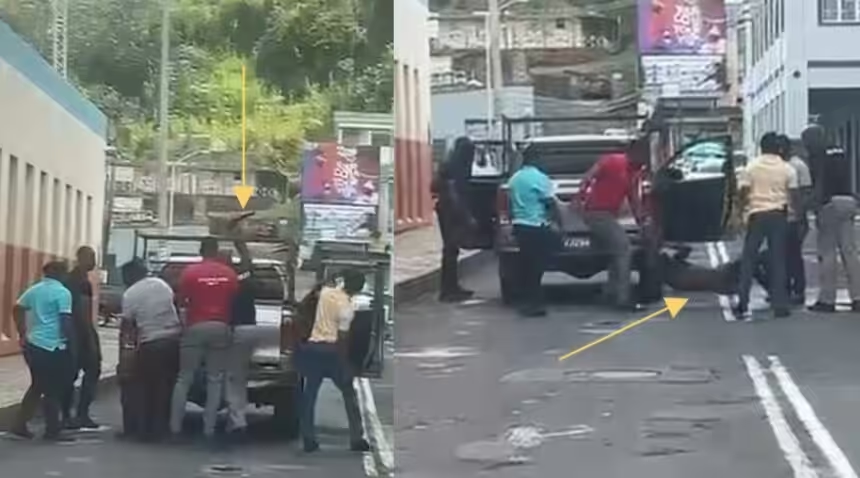
There is a stark contrast between the glaring video evidence of police brutality and the official response from the police force, which relies heavily on procedural promises rather than immediate disciplinary action.
The incident in question involves a shocking video showing six plainclothes officers severely beating a handcuffed, unarmed man in broad daylight near the Kingstown market. During the assault, officers punched the man, struck him with a baton, slammed him into a police vehicle, and one officer even appeared to draw a service weapon.

In light of this undeniable footage, outraged citizens took to social media, stating that the officers acted more like “rogue bandits” than sworn protectors of the public. Prominent lawyer Jomo Thomas highlighted that this incident reflects a pattern of “systemic impunity” and a “broader lack of judicial accountability” in St. Vincent.
Thomas pointed out that the justice system frequently shields officers; in a recent case, the court dismissed a man’s busted forehead as a mere “allegation” while the responsible officer stood by with a “smug smile”. Because of this history, there are mounting public demands for the immediate dismissal or suspension of the six officers caught on tape.
Despite the clear video evidence and the public’s demand for swift justice, the official statement from the Royal Saint Vincent and the Grenadines Police Force (RSVGPF) takes a much slower, bureaucratic approach. While the Commissioner of Police officially condemned brutality and stated that unlawful force “has no place” in the organization, the force stopped short of immediately suspending the officers.
Instead of taking immediate, decisive action against the officers, the police statement offers what critics might view as “soft platitudes” by appealing to protocol. The Commissioner ordered an investigation and asked the public to “allow that process to reach the truth”. In a statement that directly contrasts with the public’s view of the definitive video evidence, the police force argued that while a video “may raise serious questions, but a proper investigation must establish the full facts before final decisions are made”.
When comparing the two perspectives, a clear disconnect emerges:
The video is absolute proof of officers acting like thugs, compounding an already critical crisis of gang violence on the island. To the public and legal observers, the brutality is undeniable, and treating it as an “allegation” that needs to be slowly investigated is a cynical delay tactic that protects rogue officers.
The police insist they are committed to accountability, claiming that “harm cannot be reversed by words” and promising that “no officer will be protected by rank” if criminal conduct is proven. However, their insistence on establishing “the full facts” before making any “final decisions” ultimately delays immediate consequences for the officers involved.
While the police claim they are willing to apply the “full force of the law”, their reliance on lengthy internal investigations even when officers are caught on camera brutally beating a restrained man reinforces the public’s fear that the system is designed to offer soft platitudes rather than effectively root out “rogue bandits” within the force.