
Consensual sex between adults of the same sex in private is officially no longer a criminal offence in Trinidad and Tobago following a landmark judgment by the Judicial Committee of the Privy Council. Delivering its final ruling in a constitutional battle that spanned nearly a decade, the five-member panel dismissed the State’s cross-appeal and allowed the appeal brought by gay rights activist Jason Jones, bringing an end to historic legislation that criminalized private, consensual intimacy. The decision establishes that Sections 13 and 16 of the Sexual Offences Act must be interpreted in alignment with the Constitution, ensuring that adult citizens can no longer be prosecuted or branded as criminals for engaging in private, consensual sexual relations.
The ruling marks a decisive victory for Jones, who initiated the legal challenge to overturn laws that heavily impacted the nation’s LGBT community. However, the Law Lords emphasized that the legal ramifications extend far beyond homosexual relationships, altering the statutory landscape for heterosexual adults as well.
Prior to the ruling, Section 13 of the Sexual Offences Act criminalized buggery—defined as sexual intercourse per anum—carrying a maximum penalty of 25 years’ imprisonment. Because the original statutory language applied to sexual acts committed by a man with another man or by a man with a woman regardless of consent, heterosexual couples engaging in private, consensual acts were also technically exposed to severe criminal sanctions.
Similarly, Section 16 of the Act penalized “serious indecency” with up to five years’ imprisonment. Defined broadly as any act other than sexual intercourse involving the use of genital organs for sexual arousal or gratification, Section 16 encompassed acts such as consensual oral sex between adults.
Although the provision contained limited exceptions for certain acts between married spouses, it effectively rendered a wide spectrum of private, consensual sexual conduct between unmarried adults—whether same-sex or opposite-sex—potentially illegal. By ruling that both sections infringed fundamental constitutional rights, the court removed the threat of criminal prosecution from all consenting adults.
The judgment was handed down by a panel comprising Lord Reed, Lord Briggs, Lord Sales, Lord Burrows, and Lady Rose. In their written decision, the judges affirmed that the challenged provisions directly violated Jones’ fundamental constitutional right to respect for his private and family life.
Emphasizing the essential human dimension of private intimacy, the Board observed that the ability to form a deep connection with another person through an intimate and loving relationship constitutes a vital interest for all human beings, one that the state cannot arbitrarily criminalize.
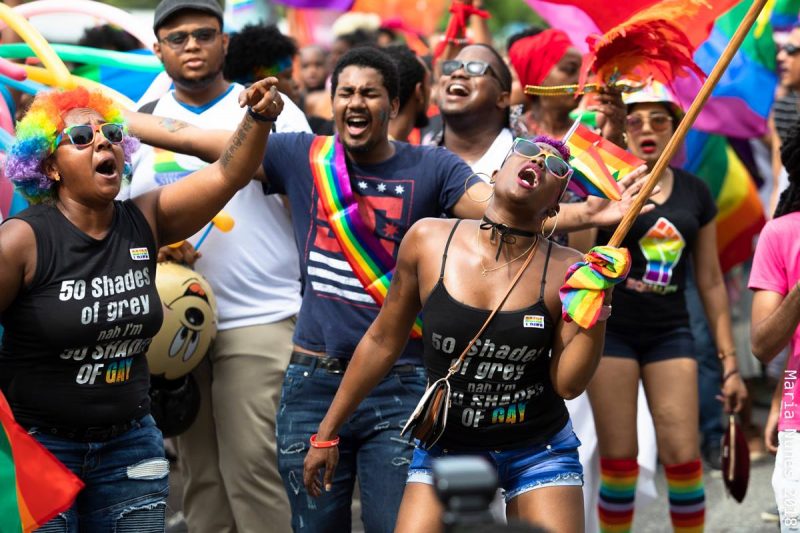
This final ruling brings to a close a legal journey that gained significant public momentum in 2018, when High Court Justice Devindra Rampersad first declared the sodomy laws unconstitutional. That same year, hundreds of supporters gathered in St Clair for Trinidad and Tobago’s first public gay pride parade on July 29.
While the Privy Council has left open the precise final framing of the formal remedial order, the Board’s decision conclusively settles the substantive constitutional question, ensuring that private, consensual adult intimacy is protected under the law.