
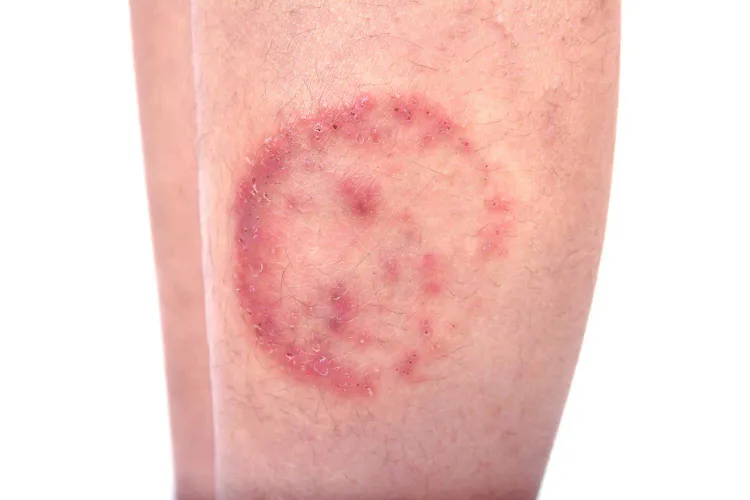
A skin fungus that causes ringworm and does not respond to standard treatment is spreading to more countries each year, according to a new CDC study.
Ringworm is a common fungal infection that causes an itchy, scaly, circular rash on the skin. The fungi that cause ringworm can also lead to infections such as athlete’s foot.
The infection spreads through skin-to-skin contact and through contaminated items such as towels, clothing, bedding and hairbrushes.
Most cases are treated with the antifungal medication terbinafine, either as a cream or a pill.
However, this strain of the fungus is resistant to terbinafine, allowing infections to persist for months and making treatment more difficult.
Researchers analyzed data from March 2022 through the end of 2025 and found that reported cases of the drug-resistant fungus tripled during that period. The fungus has now been identified in 29 countries. The first U.S. case was reported in 2023.
Most documented cases have been detected in Europe, but researchers say that likely reflects stronger surveillance and laboratory testing rather than a higher rate of infection.
The report noted that cases are likely being undercounted in parts of Africa, India and the Middle East, where the fungus is already known to be common. Researchers said limited access to advanced testing and tracking tools may be preventing health officials from fully measuring its spread.