

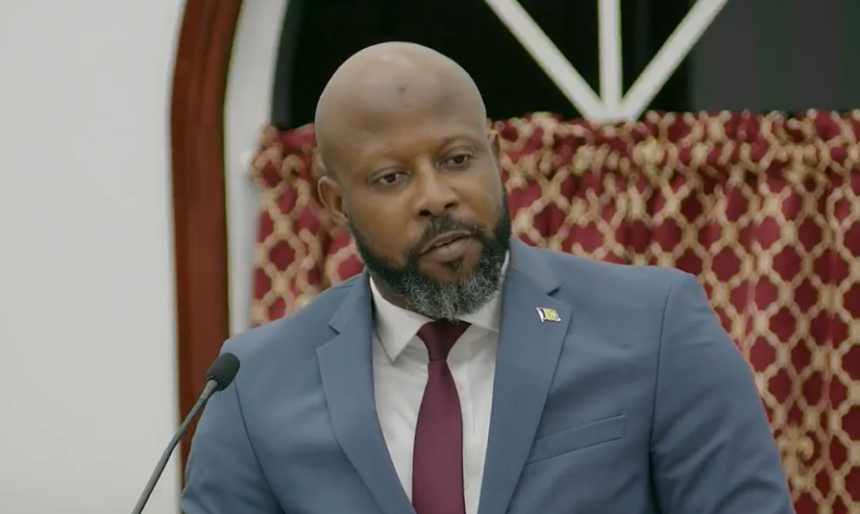
In a recent press briefing, legal representative Carlos James issued a scathing critique of the Royal St. Vincent and the Grenadines Police Force, framing recent allegations of brutality not as isolated incidents, but as evidence of deep-seated systemic deficiencies and institutional failures. While James maintained that the force contains many “good men and women,” he argued that the “rotten eggs” among them are protected by a lack of training and a perceived culture of silence within the police hierarchy.
A central theme in James’s critique is the manifest lack of specialized training for officers dealing with vulnerable populations. Referring to the “vicious” attacks on Kenton Harris, a man with chronic psychiatric challenges, James asserted that the state’s handling of such individuals is a measure of the society’s character.
- Deficiency in De-escalation: James highlighted that officers appear “not properly trained” to manage direct contact with the mentally challenged, leading to repeated “improper” conduct.
- The Need for “Special Measures”: He called for the invocation of “special measures” in law and police practice to ensure that vulnerable citizens—including victims of sexual abuse and those with mental illness—are protected rather than abused.
James raised serious concerns regarding the transparency and integrity of internal police investigations. The most “alarming” institutional critique involved the case of Louis Mercury, who was shot seven to eight times by a uniformed officer. James revealed that when Mercury’s family attempted to lodge a formal report, they were refused by the Public Relations and Complaints Department.
This refusal, James argued, suggests a deliberate effort to circumvent justice. He questioned whether the police were “hiding this matter from the public” and suggested that the officer who denied the family’s statement should be removed for either a lack of training or an intentional attempt to “cover up” the incident.
James characterized the actions of certain officers as “misfesance in public office,” citing a deliberate and malicious abuse of state power. He pointed to several systemic themes:
- Excessive Force: In the Mercury case, James argued the use of seven to eight rounds at “point blank range” was “far removed from any training” and constituted an unreasonable use of lethal force.
- Breach of Custodial Duty: Regarding Kenton Harris, James noted that since the state’s custodial duties are “absolute and non-delegable,” the failure to ensure his safety while in handcuffs represents a catastrophic institutional failure.
- Vicarious Liability: James emphasized that the state must be held vicariously liable for the “torturous acts” of its agents, as these abuses occurred during the execution of their official duties.
Ultimately, James positioned these legal actions as a means to trigger changes in police practice and procedure. He argued that a “heightened public interest” is necessary to place pressure on the Office of the Commissioner of Police and the Director of Public Prosecutions to ensure that justice is “seen to have been done”. By bringing these “grave instances of injustice” to light, James seeks to root out the “bad eggs” and address the systemic shortcomings that allow such abuse of power to persist within the constabulary.