
RSVGPF LEADS SURVIVOR EMPOWERMENT INITIATIVE AT BLACK POINT
For survivors of sexual abuse, the end of an investigation does not necessarily mean the end of the trauma.
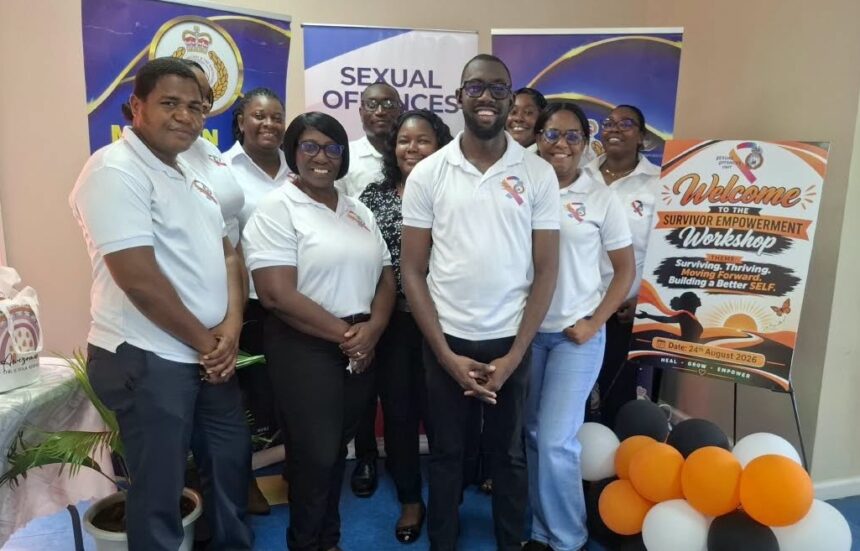
Recognising that reality, the Sexual Offences Unit of the Royal Saint Vincent and the Grenadines Police Force (RSVGPF) brought survivors, counsellors, social workers, healthcare professionals, mental health practitioners and community partners together at the Black Point Golden Years Activity Centre on Monday, August 24, 2026, for a Survivor Empowerment Workshop focused on healing, resilience and rebuilding.
The initiative reflected an important part of the RSVGPF’s approach to sexual offences: the responsibility of the police does not end with receiving a report, conducting an investigation or placing an accused person before the court.
There is also a human responsibility.
Survivors must be treated with dignity. They must be listened to. They must know where support is available. And, wherever possible, they must be connected with persons and services that can help them rebuild their confidence and move forward with their lives.
That was the purpose of the workshop.
Throughout the day, participants were encouraged to confront difficult experiences without allowing those experiences to define who they are or what their future can become.
The conversations moved beyond the circumstances that brought survivors into contact with the Sexual Offences Unit and focused instead on what comes next: coping with trauma, rebuilding self-esteem, recognising emotional warning signs, practising self-care, making healthy decisions and developing the resilience needed to move forward.
The setting was deliberately supportive.
Rather than speaking only about offences, evidence and court proceedings, participants were able to engage with professionals whose work deals directly with the emotional, psychological, social and health consequences that can follow abuse.
This multidisciplinary approach is central to what the RSVGPF hopes to strengthen through initiatives of this nature.
Sexual violence is not solely a policing issue.
It affects families, schools, workplaces, healthcare systems and entire communities. Effective support therefore requires law enforcement to work alongside social services, counsellors, mental health professionals, healthcare providers, government agencies, community organisations and the private sector.
Among those present were Minister of National Mobilisation, Social Development, Family, Gender Affairs, Youth, Housing and Informal Human Settlement, Hon. Laverne Gibson-Velox; Pastor Cameel Bobb; Assistant Superintendent of Police Atland Browne; Assistant Superintendent of Police Wilmet John; Mr. Klieton Burnette; social workers Ramora Grant and Daniela Joseph, along with other professionals and stakeholders.
Minister Gibson-Velox encouraged participants to recognise the difference between remaining defined by victimisation and moving forward as survivors.
Referring to the participants as “sheroes,” she challenged them to reclaim control of their lives and reminded them that the courage to confront painful experiences, seek support and begin the healing process represents an important step towards a different future.
Pastor Bobb also offered encouragement to participants, drawing on personal experiences to reinforce the message that difficult circumstances do not have to determine the limits of a person’s life.
She encouraged the women and girls present to continue pursuing their goals despite what they had endured and referenced Psalm 34:18, reminding them that the Lord is close to the brokenhearted.
The workshop also provided participants with practical tools that could be applied beyond the day’s programme.
Ms. Kimmeth Robertson, a mental health professional, social entrepreneur and women’s health advocate, focused on self-care and mental well-being.
She encouraged participants to pay attention to the relationship between their emotional and physical health and introduced the concept of green, yellow and red signals to help them recognise changes in their mental and emotional state.
The discussion encouraged participants to identify the warning signs that may indicate when they are struggling and when professional or other forms of support should be sought.
Mrs. Verna John, a social worker and former police officer with considerable experience in the investigation of sexual offences, addressed trauma and self-esteem.
Her message was particularly important: survivors should not carry responsibility for abuse committed against them.
Participants were encouraged to resist self-blame, rebuild their sense of worth and understand that what happened to them does not determine who they must become.
Mrs. John’s contribution also reflected the connection between policing and survivor support. Having previously served within law enforcement and investigated sexual offences, she brought both an investigative and psychosocial understanding of the challenges survivors may experience.
Further contributions were made by Ms. Roselle Solomon, whose professional background includes counselling, psychosocial support and community intervention, and Ms. Alyssia Defreitas, a staff nurse whose interests include adolescent sexual and reproductive health and youth development.
Together, the contributors reinforced a central message of the workshop:
healing is not weakness, asking for help is not failure, and surviving abuse does not mean surrendering one’s future to it.
For the RSVGPF, this initiative represents more than a single event.
It is part of the Sexual Offences Unit’s continuing effort to strengthen the way survivors are supported before, during and after their engagement with the criminal justice process.
The Force recognises that survivors may carry emotional and psychological consequences long after the immediate investigative process has ended. Creating opportunities for education, empowerment, professional support and meaningful dialogue is therefore an important part of building a more compassionate response to sexual violence.
The RSVGPF is also seeking to strengthen public confidence in reporting sexual offences.
For that confidence to grow, survivors must believe that when they come forward they will be treated professionally, respectfully and without judgement.
Families and communities also have a role to play.
Victim-blaming, intimidation, ridicule and the exposure of survivors can cause further harm and may discourage others from reporting abuse.
The RSVGPF therefore continues to appeal to the public to support survivors, protect their dignity and encourage persons who have experienced sexual violence to seek appropriate help.
The success of the workshop was also strengthened by the support of businesses, organisations and individuals who contributed to the initiative.
The Sexual Offences Unit and the RSVGPF express sincere appreciation to:
Coreas Pharmacy, Kingstown; ASL Auto, Villa; The KNL Perfume Store, Georgetown; East Coast Pharmacy, Georgetown; Forbes Investment, Georgetown; St. Vincent Distillers Limited; Grant Connell Chambers; Mrs. Margret Mars; C’s All in One Business; J Gs’ and Sons Limited; Don Digital; Swirl Wine Bar; Prolific Tinting; Third Element; Mr. Alpheus Nanton; Swift Design, North Union; National Insurance Services; Ms. Shamara Franklyn; and Mountain Top Springs.
Their support demonstrates what becomes possible when law enforcement, government, professionals, businesses and ordinary citizens recognise that the wellbeing of survivors is a shared responsibility.
The RSVGPF hopes that this partnership will continue to grow.
Supporting survivors cannot be confined to one workshop, one department or one institution. It requires sustained commitment from across Saint Vincent and the Grenadines.
Through the Sexual Offences Unit, the RSVGPF intends to continue leading from the front by investigating sexual offences professionally, encouraging reporting, strengthening survivor support, building partnerships and creating opportunities for survivors to access information and assistance.
The message emerging from Black Point is therefore one of more than survival.
It is a message of possibility.
What happened to a person can become part of their story without becoming the end of it.
The Royal Saint Vincent and the Grenadines Police Force remains committed to standing with survivors, working with its partners and helping to create a society in which persons affected by sexual violence can seek justice, receive support and move forward with dignity, confidence and hope.