

How Saint James School of Medicine Trains Doctors to Spot Tropical Diseases
When Dr. David Michael’s brother-in-law returned to Canada from Nigeria severely ill and exhausted, emergency room doctors were mystified. Unable to diagnose his rapidly deteriorating condition, the hospital sent him home. It was only after Michael’s father, a community pharmacist, reviewed his travel history and suspected malaria that life-saving treatment was initiated—days before the emergency department finally called back to confirm the diagnosis.
That near-miss revealed a blind spot in Western medicine: physicians rarely recognize tropical pathogens until it is almost too late.
Today, as climate change accelerates the migration of disease vectors, that diagnostic gap is becoming an acute clinical risk. In response, medical trainees from Saint James School of Medicine (SJSM) are embedding directly in Suriname’s rainforests and frontline clinics, trading high-tech hospital wings for jungle outposts to master illnesses that are no longer confined to the equator.
For decades, medical education in the West treated vector-borne tropical pathogens as textbook curiosities. But the geographic reality of infectious diseases is shifting rapidly.
In 2023, locally acquired malaria resurfaced in Florida and Texas for the first time in two decades, followed by locally acquired dengue cases in both states. Warmer global temperatures and shifting weather patterns continue to expand mosquito habitats northward, while international travel and migration introduce patients from endemic regions to clinics where doctors have never managed an active case.
“Tropical diseases are no longer far away,” explains Dr. Soenita Nannan-Panday-Gopisingh, Course Director for the program and Medical Director at ‘s Lands Hospitaal—Suriname’s oldest hospital. Having trained in the Netherlands and led the institution since 2014, Dr. Nannan-Panday-Gopisingh stresses that every future clinician must be equipped to diagnose vector-borne threats.
Offered as a Diploma in Tropical Medicine and Public Health and an intensive four-week elective, the SJSM curriculum bridges rigorous online coursework with clinical immersion in Suriname.
Participants spend roughly 40 hours conducting lab work and clinical rounds across Paramaribo’s premier medical centers—Academic Hospital Paramaribo and ‘s Lands Hospitaal. Under the clinical leadership of Dr. Stephen Vreden, a leading malaria researcher affiliated with the foundation for postgraduate medical education (SPAOGS) and a WHO-affiliated infectious disease specialist, students undergo intensive diagnostic training.
“In medical school, I never prioritized tropical diseases for board exams because they are rarely encountered in Western medicine,” says Dr. Michael. “I often confused dengue, malaria, chikungunya, and yellow fever. Learning from Dr. Vreden helped me develop a much deeper understanding.”
That training was put to the test immediately: Dr. Michael witnessed an active chikungunya outbreak firsthand, observing patients suffering from incapacitating arthritic pain, and evaluated patients presenting with cutaneous leishmaniasis and leprosy.
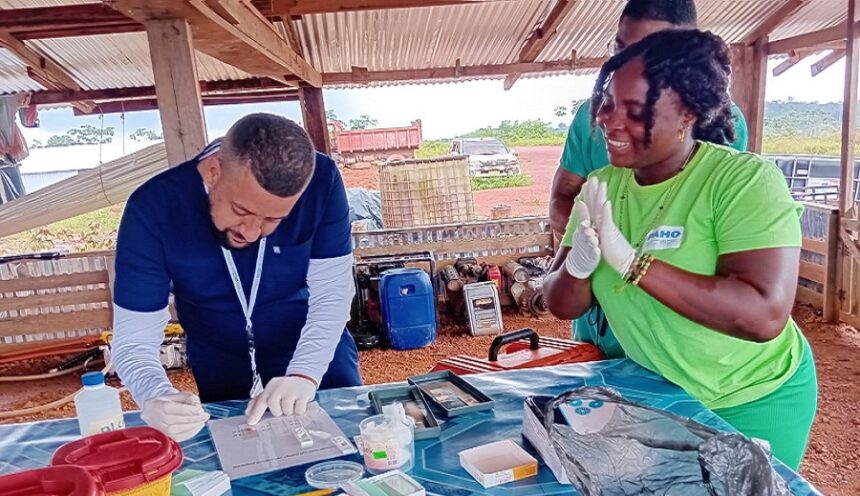
Beyond Paramaribo’s wards, trainees ventured into active gold mining operations to screen symptomatic workers for malaria using on-site blood smears. They also spent a week in remote Amazonian clinics serving Amerindian and Maroon communities, where local nurses deliver primary care with limited resources and visiting doctors arrive just once a year.
“In settings where CT scans and advanced tools aren’t available, you learn to rely on your clinical judgment,” says Dr. Michael. “Good medicine isn’t defined by access to advanced technology—it’s defined by critical thinking.”
Launched in October 2025 with an initial pilot of two students, the program expanded to four trainees in May 2026, graduating six students across its first two cohorts.
In August 2026, SJSM’s Diploma in Tropical Medicine and Public Health earned official accreditation from the American Society of Tropical Medicine and Hygiene (ASTMH)—joining an elite roster of approved programs that includes Johns Hopkins University, Baylor College of Medicine, Tulane University, and the London School of Hygiene & Tropical Medicine. SJSM is the first Caribbean medical institution to offer an approved diploma taught directly inside the tropics.
Graduates of the program qualify to sit for the ASTMH Certificate of Knowledge in Clinical Tropical Medicine and Travelers’ Health (CTropMed®) examination, an internationally recognized credential.
Dr. Jose Ramirez, Provost of Saint James School of Medicine, notes that while the program originated for SJSM students, the diploma is open to medical students and practicing clinicians worldwide, with the next cohort scheduled for April/May 2027.
For Dr. Michael, who is pursuing emergency medicine, the fieldwork redefined his view of clinical responsibility.
“This rotation taught me that infectious diseases do not respect borders,” Dr. Michael says. “As our climate changes, physicians must adapt their knowledge to recognize emerging threats and provide timely, appropriate care.”
