

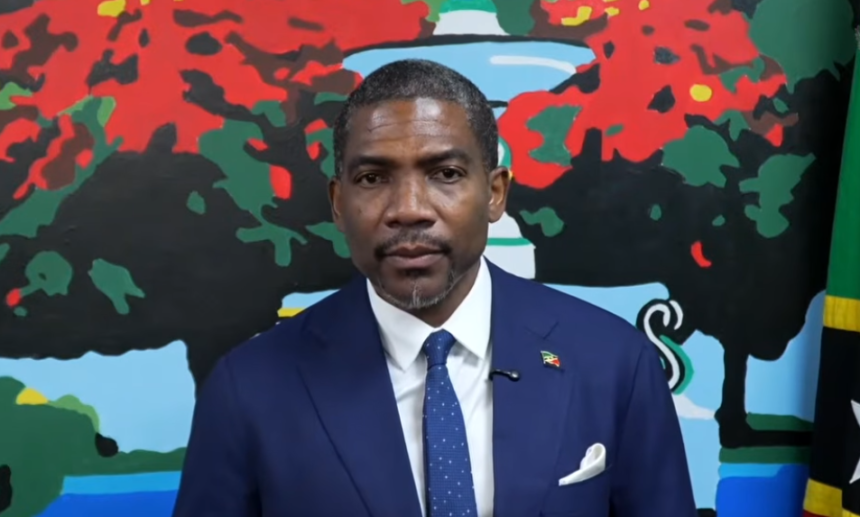
Prime Minister Dr. Terrance M. Drew announced that St. Kitts and Nevis will responsibly phase out its pioneering Citizenship by Investment (CBI) program over a negotiated transition period with the European Union, marking a decisive shift in the Caribbean nation’s economic model. Addressing the federation on November 13, 2026, Prime Minister Drew stated that the government has formally notified European officials of its decision to wind down the 42-year-old initiative—the oldest program of its kind in the world—in order to safeguard international trust, preserve visa-free travel, and insulate the domestic banking sector from systemic global risks.
The announcement represents a defining turning point for a program that fundamentally reshaped the nation’s financial architecture over four decades. Established following independence under the 1983 constitution and formal 1984 parliamentary legislation, the CBI program initially operated on a modest scale before expanding dramatically after the 2008 global financial crisis and the closure of the national sugar industry. Between 2008 and 2025, the program generated approximately EC $6.5 billion, accounting for roughly half of all cash collected by the federal government and funding vital public infrastructure, including roads, schools, affordable housing, the new Basseterre High School, and pandemic recovery efforts.
However, Prime Minister Drew detailed how long-standing vulnerabilities and past governance failures severely compromised the program’s integrity. Highlighting aggressive price-undercutting that began in 2017 and systemic abuses associated with a 2021 prison construction project—where over 5,000 citizenship shares were unlawfully distributed for as little as $60,000 despite a legal minimum requirement of $175,000—Drew noted that thousands of unvetted applications entered international channels, triggering intense alarm among global security partners and threatening the nation’s visa-free travel privileges.
Upon taking office in August 2022, the Drew administration enacted sweeping structural overhauls to stabilize the program, creating independent oversight bodies, introducing criminal penalties for underselling, elevating the minimum investment threshold to $250,000, and establishing the Eastern Caribbean Citizenship by Investment Regulatory Authority (SIRA). The government also implemented comprehensive due diligence units and mandatory biometric enrollment protocols requiring all economic citizens to register by July 2027. While these rigorous reforms successfully preserved visa-free access to the United Kingdom and Europe and restored partial access to Canada, subsequent legal shifts in Europe prompted a final strategic decision.
Following the enactment of new European Union legislation in December 2025 establishing CBI operation as grounds for revoking Schengen visa-free entry, the European Commission formally invited St. Kitts and Nevis in June 2026 to negotiate a structured wind-down transition. Prime Minister Drew emphasized that refusing the EU’s request would pose existential dangers to the national economy. Beyond losing visa-free entry across Europe, continued operation risks international blacklisting and the severance of correspondent banking relationships with major financial institutions in North America and Europe, which would halt credit card processing, international remittances, and commercial trade.
Reassuring current citizens and global investors, the Prime Minister affirmed that nothing changes for individuals who have lawfully acquired citizenship, confirming that existing travel privileges and rights remain entirely intact. The CBI program will continue operating under maximum security scrutiny during the transition phase until a final application cutoff date is formally agreed upon with European negotiators. Furthermore, specialized staff within the Citizenship by Investment Unit will be redeployed to drive direct foreign investment across emerging sectors of the economy.
The planned exit comes as St. Kitts and Nevis significantly reduces its fiscal dependence on passport revenues, with CBI funds falling from 70 percent of government revenue in 2022 to less than 20 percent in 2026. Recent evaluations by the International Monetary Fund confirmed that the federation’s debt sustainability remains sound and its banking sector stable, laying a firm foundation for the government’s flagship Sustainable Island State Agenda.
Under this broader economic transition, the government is placing clean energy, food security, and modernized tourism at the core of national growth. Key initiatives include drilling six geothermal wells in Nevis, building a major power plant and submarine energy grid to St. Kitts, and advancing a 50-megawatt solar project to position the federation as a net energy exporter to neighboring territories such as Antigua and Barbuda and St. Martin. Additionally, P&O Cruises will homeport two major vessels in Basseterre starting in November 2027, supported by ongoing cruise terminal expansions and shore-power integration at Port Zante, while subsea fiber optic projects and a statutory Sovereign Wealth and Resilience Fund reinforce long-term stability as the nation enters a new economic era.
