

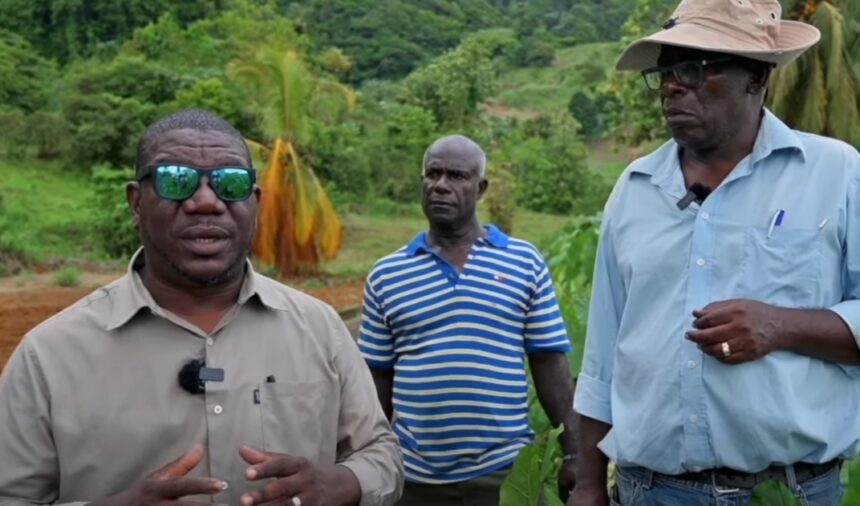
Minister of Agriculture Israel Bruce emphasizes that agriculture is one of the four principal pillars intended to drive the economy of St. Vincent and the Grenadines, alongside the blue economy, tourism, and the new orange economy. During a visit to a dasheen fertilizer and spacing trial, the Minister expressed several key points regarding the future of the sector:
Bruce expressed profound gratitude to the Caribbean Agriculture Research and Development Institute (CARDI) for their collaborative research, noting that the industry relies on this relationship to use technology to maximize production.
He highlighted that scientific research allows the ministry to be “definitive” when speaking to prospective purchasers. By knowing the specific yield of a variety based on spacing and fertilizer application, they can better manage marketing and supply.
The Minister pointed out that research helps farmers make informed decisions following natural disasters. For instance, studies on soil levels and fertilizer combinations (like lime and compost) were crucial after volcanic ash deposits, and current spacing trials can determine which plant arrangements best withstand tropical storms.
Bruce stressed that a career in agriculture is not limited to using a fork in a field. He wants young people to see the “elevated space” of the sector, which includes soil testing, data analysis, and scientific research. He specifically addressed students from several local schools—including North Union Secondary, Adelphi Secondary, Mountain View Adventist Academy, Emanuel High School, and St. Joseph’s Convent—assuring them that there is room for them in agriculture and that the government will continue to create opportunities for them.
The Minister discussed a plan to establish a “green team” of experts who would travel regionally and internationally to conduct marketing analysis. This team aims to ensure that farmers have consistent markets and pricing for their produce.
He emphasized the importance of building a “body of knowledge” that can be transplanted and transformed directly to farmers to increase productivity.
Brucie views the integration of science into farming as a way to bridge the gap between theoretical knowledge and practical advancement, stating that once the ministry and research institutes work hand in hand, there is “no turning back” for the sector.