


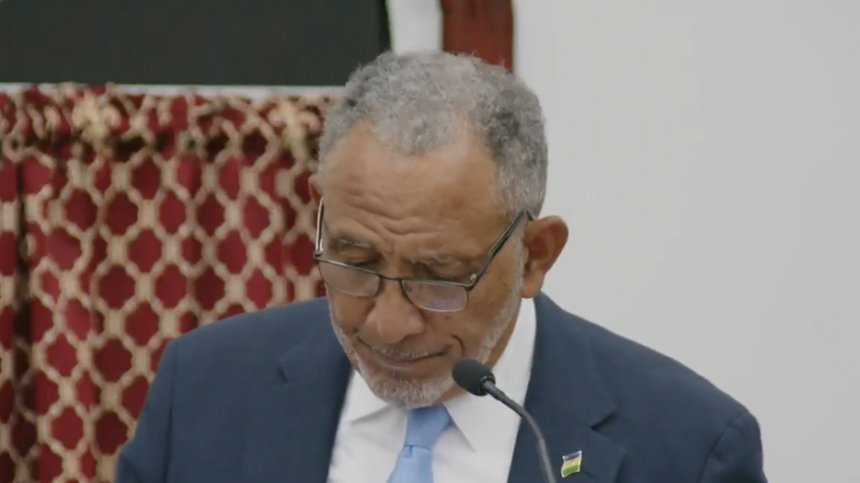
The 2026 Budget Address delivered by Prime Minister Dr. Godwin Friday revealed that in the multi island state of St Vincent and the Grenadines, poverty is a “silent crisis,” noting that nearly one in three Vincentians lives in poverty or is vulnerable to falling into it.
This assessment, based on the 2018 Survey of Living Conditions and the 2023 Population and Housing Census, exposes that more than 33% of the population is either already living in poverty or is just one paycheck or natural disaster away from falling into it.
The PM revealed that the “indigence line”—the cost to meet basic nutritional needs—now exceeds $3,642 per adult per year (roughly $10 per day) just to eat adequately.
In 2024, an average family of three requires a minimum monthly expenditure of EC$1,898 just to escape poverty, a threshold that is drifting further out of reach due to inflation.
In relation to the The Grey Zone, the PM said many of the poor work in the informal economy (estimated at 41.8% of the workforce), lacking contracts, benefits, or social security, which creates a cycle of job insecurity.
The budget notes that poverty is not random but has a specific face and home:
The “Forgotten North”: Poverty is spatially concentrated in rural northern communities, specifically the “Red and Orange Zones” that suffered the most during the La Soufrière eruption.
Gendered Vulnerability: A significant share of the poor live in female-headed households, where women are disproportionately affected by caregiving responsibilities and limited access to land.
To address this, the government announced several immediate and structural measures:
Immediate Relief: The “Poor Relief” (Public Assistance) benefit is being doubled from $360 to $500 per month for all 4,614 beneficiaries to help cushion the cost of living.
Youth Guarantee: A pledge that every young person will have access to a job, a training spot, or a structured internship by the end of the administration’s term.
Targeted Support: The introduction of the “WE CAN Empowerment Programme” to link social assistance with skills training and family life education, moving beneficiaries from dependency to employment.