

The Government of St. Vincent and the Grenadines has officially approved a 90-day extension of its comprehensive cost-of-living relief package.
Originally introduced in May in response to soaring international fuel prices and global inflation, the extended measures are designed to shield vulnerable populations, public transport operators, and the agricultural sector from ongoing economic pressures.
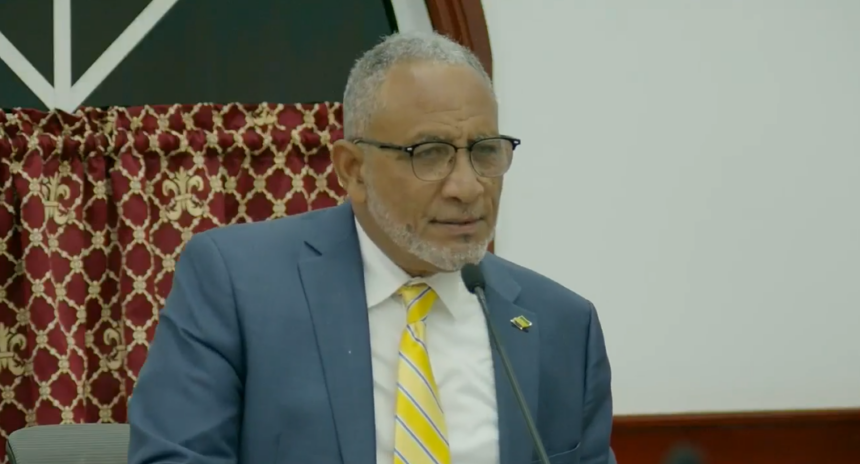
Addressing the House of Assembly during a parliamentary ministerial report, Prime Minister and Minister of Finance Dr. Godwin Friday announced that the Cabinet took the decision on August 19, 2026, to prolong the relief measures for an additional three months.
The policy, which was set to expire, represents a coordinated effort by the administration to absorb the “pain” of a global energy crisis triggered by Middle East tensions, ensuring that rising costs are not passed entirely onto local households.
At the core of the extended economic package is a series of substantial tax reductions aimed directly at energy and fuel consumption. Under the Cabinet’s renewed directive:
- Imported Petroleum Products: The government will maintain a 50 percent reduction in both the excise tax and the customs service charge levied on all imported diesel, gasoline, and low-sulfur diesel.
- Electricity Generation: To stabilize electricity rates, the government has waived the customs service charge and excise taxes on diesel purchased by Vinlech from fuel suppliers Saul and Pivy. This subsidy alone was estimated to cost the government over $1.6 million in July, with Vinlech contributing an additional $470,000 directly to support consumers.
- Cooking Gas (LPG): Households and the local restaurant sector will continue to benefit from a 100 percent waiver of the customs service charge on liquid petroleum gas (LPG). Over its initial 90 days, this measure alone provided over $500,000 in direct relief.
To promote long-term energy independence, the government is also keeping its existing policy of a 100 percent waiver on import taxes for both on-grid and off-grid solar photovoltaic systems, including solar panels. Public and private sector entities are also being encouraged to undertake energy audits to minimize waste and keep overall consumption down.
To prevent rising shipping costs from inflating the price of basic goods, the government has adjusted how import duties are calculated. All shipper surcharges have been removed from the freight component when calculating the Cost, Insurance, and Freight (CIF) value of imports for items that are currently zero-rated under the Value Added Tax (VAT). Instead, the government is utilizing the Free on Board (FOB) value for import tax calculations, ensuring that the tax-free status of essential commodities remains intact.
Recognizing that the Middle East oil crisis has driven up global chemical and manufacturing costs, the government has intervened to protect local farmers. The Cabinet has approved a direct subsidy of $67,871 to the Agricultural Input Warehouse to stabilize the price of essential fertilizers, which had seen unprecedented price shocks.
According to government data, the price of Triple Super Phosphate—a fertilizer heavily relied upon by local farmers—had surged 41 percent, rising from $56.99 to $80.00. Similarly, Urea prices experienced a 39 percent increase. The newly approved government subsidy is designed to absorb these dramatic hikes so that farmers are not forced to bear the brunt of the global market spike.
The Prime Minister emphasized that these extended subsidies build upon earlier, permanent social assistance increases enacted by the administration. Earlier in the year, public assistance rates for the country’s most vulnerable citizens were raised from $360 to $500. Additionally, the government paid out a salary bonus to public servants, which was structured to give the highest proportional benefits to daily-paid workers, both full-time and part-time.
Furthermore, the government is rolling out its “free shopping day” initiative (also referred to as “battery day” or “school shopping support”) to provide immediate assistance to families preparing to send their children back to school for the upcoming academic year.
While acknowledging that the national fiscal situation is under significant pressure—with some senior public servants noting that the country had neared an unprecedented fiscal precipice inherited from the previous administration—the government maintains that protecting the public remains its highest priority.
The Prime Minister stated that the administration will closely monitor the impact of these subsidies over the next 90 days. At the end of this period, the Cabinet will revisit the economic landscape to determine how best to continue supporting low-income households, minibus and taxi operators, fishers, and farmers as they navigate this global crisis.
