

The Government of St. Vincent and the Grenadines is bearing an escalating financial burden to shield citizens and businesses from global energy price volatility, with monthly electricity subsidies reaching a record high alongside ongoing tax reductions.
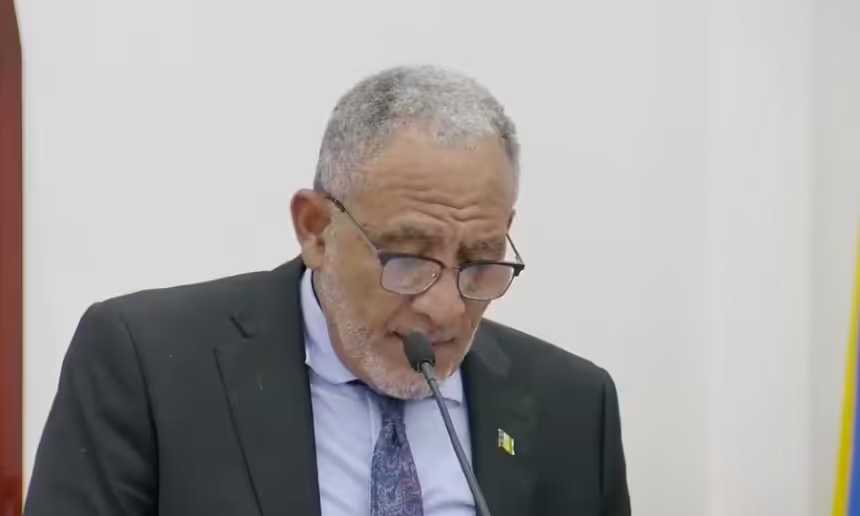
Addressing the House of Assembly, Prime Minister Godwin Friday disclosed that state interventions designed to cushion the domestic economy from international market shocks have required millions of dollars in direct expenditure and foregone revenues.
According to parliamentary disclosures, state support provided to electricity utility VINLEC reached $798,591 for the month of October—marking the highest single-month subsidy level recorded to date.
Despite a 7-cent increase that brought October’s electricity fuel surcharge to 86.71 cents per kilowatt-hour (kWh), state intervention prevented consumer utility bills from climbing substantially higher. Without the monthly state absorption, the fuel surcharge would have reached 92 cents per kWh.
Since cost-of-living relief measures were first introduced in May 2026, cumulative state subsidies paid to VINLEC have reached $3.9 million. This financial cushion has prevented the full brunt of escalating global fuel prices from being passed directly onto households and commercial enterprises.
In addition to direct utility subsidies, the administration is maintaining a 50% reduction in the excise tax across gasoline, diesel, and low-sulfur diesel.
This tax suppression measure deliberately absorbs lost state revenue to keep pump prices lower than international market conditions would otherwise dictate. The price interventions are designed to cushion the public against sustained oil price volatility linked to ongoing conflict in the Gulf region.
While recent three-month average price buildup adjustments provided relief at the gas pump with a $1.02 drop in retail gasoline to $17.29 per gallon, retail prices for diesel and low-sulfur diesel faced slight upward ticks to $17.57 and $17.73 per gallon, respectively.
The Prime Minister warned that rising fuel and energy costs exert inflationary pressures across the entire economy, as fuel serves as a primary input cost for all domestic production, goods, and services.
Because high relief costs consume public funds that could otherwise be directed into broader economic investments, citizens were urged to practice personal energy conservation. Recommended measures include walking for short errands rather than using motor vehicles, as well as reducing household electricity consumption.
Acknowledging that continuous subsidies and tax cuts represent a heavy fiscal drain, government officials emphasized that long-term economic relief depends on structural energy reform.
The government reiterated its policy determination to move aggressively away from imported fossil fuels toward domestic renewable energy sources, which will permanently protect the country from recurring global price shocks and stabilize utility costs for consumer.
