

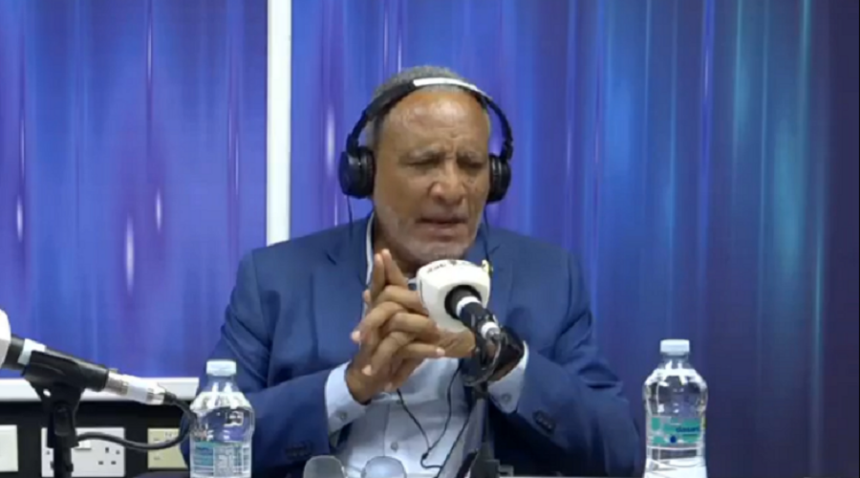
Prime Minister Dr. Godwin Friday has described the current economic state of St. Vincent and the Grenadines as being in a “tenuous” and “delicate” position, revealing that the national debt has reached an “unhealthy” 113% of the country’s GDP.
During a national broadcast, the Prime Minister noted that international institutions like the IMF had flagged the country for “debt distress” as far back as 2016, yet the previous administration continued to drive up debt to unsustainable levels. This fiscal situation has led to a Moody’s credit rating downgrade from B3 to CA1, a move that the Prime Minister admits will make future borrowing more difficult and expensive.
To address this crisis, Prime Minister Friday outlined a multi-pronged recovery strategy focused on stabilizing the “patient” and pulling the country back from the “precipice”.
A key component of this plan involves “swapping out” expensive debt for more favorable terms and pursuing concessional funding from international institutions. As part of this effort, St. Vincent and the Grenadines recently joined the Central American Development Bank (CAF) to access more generous loan terms than those offered by bilateral or local lenders.
The Prime Minister emphasized that the country cannot simply “grow out of debt” through efficiency alone; instead, the government must generate faster economic growth by partnering with the private sector. He argued that because the government’s ability to borrow for large projects is now constrained, the administration will rely on Foreign Direct Investment (FDI) and local private investment to create jobs and expand the tax base.
“Government don’t run a factory… Government taxing you the ordinary person and the businesses,” Friday remarked, noting that a thriving productive sector is the only way to generate the revenue needed for hospitals, schools, and scholarships.
Friday characterized the inherited fiscal environment as one where the government’s overdraft was well beyond the legal limit, with debt projected to climb to 124% by 2029-2030 if corrective measures are not taken. He compared the national crisis to a personal “credit card” situation, stating that the country can no longer sustain its quality of life by borrowing without the means to pay it back.
Currently, 39 cents of every dollar the government earns is consumed by debt servicing, which the Prime Minister noted is far too high to maintain essential social programs and infrastructure.
While acknowledging that the situation is “tight,” the Prime Minister expressed optimism that through political discipline and a “homegrown plan,” the administration will arrest the decline.
He promised that the upcoming budget would feature specific measures to show a different course for the nation’s finances. “People hired me not just to recognize the circumstances that we are in but to fix them,” Friday stated, asserting that the ultimate goal is to put the country on a path toward sustainable growth and greater prosperity.
