

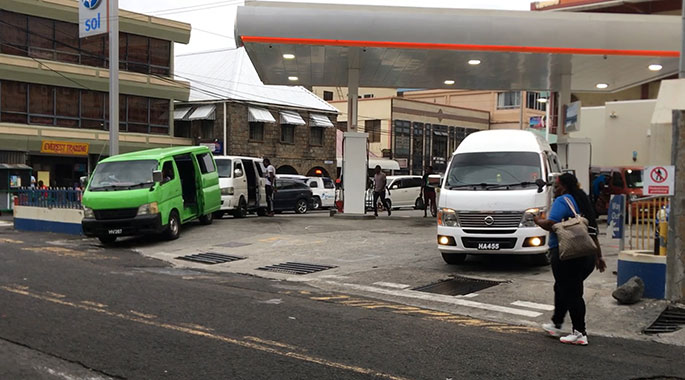
New fuel prices will officially come into effect in Saint Vincent and the Grenadines on June 29, 2026, following the publication of the Price Control (Amendment) (No. 2) Order 2026.
Under the updated schedule, the maximum retail price for gasolene in Areas I, II, III, and IV has been set at $18.31 per gallon, while its maximum wholesale price at bulk installation is capped at $17.55 per gallon. Meanwhile, the retail price for standard dieselene is now $17.53 per gallon (with a wholesale price of $16.87 per gallon), and low sulphur dieselene will retail at $17.40 per gallon (wholesale $16.74 per gallon).
These significant price adjustments arrive just months after stark warnings were issued by the opposition regarding the country’s energy strategy. During an address on April 14, 2026, Opposition Leader Ralph Gonsalves sounded the alarm on an impending severe fuel crisis, explicitly warning citizens that gasoline prices could soon approach the $20 per gallon mark.
At the time, Gonsalves fiercely criticized the ruling administration for a lack of clear leadership and for “kicking the can down the road” in response to skyrocketing global oil prices. He revealed that the government had been absorbing massive financial losses—describing them as being in the “malos”—estimating that in March alone, the administration owed fuel companies like Sol and Rubis an average of $3 per gallon to artificially maintain pump prices.
He further cautioned that if the global price surge pushed this average deficit to $5 or $6 per gallon, the government could face an unsustainable financial burden of $4 million to $6 million every month just to cover road transport shortfalls.
In his April remarks, Gonsalves heavily condemned a government proposal to implement a four-day work week as a strategy to ration fuel, arguing that forcing citizens to leave their cars at home and cutting working hours would drastically slash workers’ take-home pay and cripple national productivity. Instead of “managing and dispensing scarcity,” he urged the government to proactively decide whether to reduce taxes or actively subsidize prices, particularly to shield the diesel-dependent public transport sector. He noted that his own administration had successfully utilized structured economic buffers and subsidies during the 2008 global economic depression and again in 2022.
Gonsalves also highlighted that the domestic price crisis is being severely compounded by international geopolitical turmoil. He pointed to global conflicts, including tensions with Iran, potential blockades in the Strait of Hormuz, and Houthi activity in the Red Sea, as external pressures keeping oil and transportation costs highly elevated. He warned that without decisive and transparent action, the ongoing fuel crisis would rapidly accelerate the country’s economic deterioration.