

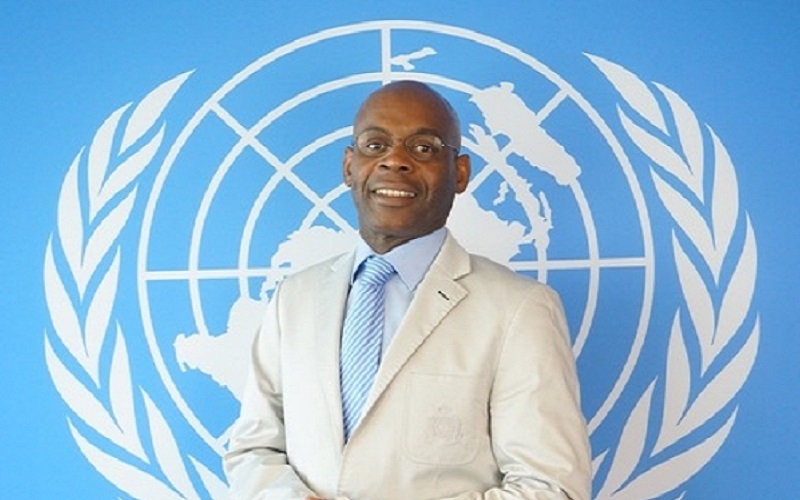
Dr. Richard Byron Cox, a lawyer and citizen of St. Vincent and the Grenadines, characterizes the U.S. military action in Venezuela as an illegal act and defines the removal of President Maduro as a kidnapping rather than a capture.
Dr. Cox asserts that the United States violated the Charter of the United Nations, which he describes as the “backbone of contemporary international law”. He explains that the charter prohibits not only the use of force but also the threat of force, concluding that the U.S. broke the law twice—first by threatening Venezuela with military buildup and then by invading it.
He emphasizes that sovereignty is the foundational basis of international law and states that the U.S. has ignored this principle entirely.
Dr Cox highlighted that there is “not a shred of evidence” to support the accusations of drug trafficking against Maduro, arguing that without such evidence, the intervention is legally and morally indefensible.
Cox suggests the primary motivation for the intervention is the control of Venezuela’s strategic resources, particularly its oil. He explains that since Venezuela holds the world’s largest known oil reserves, its potential to trade oil in non-dollar currencies (such as the BRICS “unit”) poses a direct existential threat to the U.S. dollar and the American economy.
He views this event as a “latest version” of a long-standing U.S. policy of regime change, comparing it to historical interventions in Afghanistan, Iraq, Libya, and Syria and rejected the idea that this is solely a “Donald Trump” action, calling it instead a consistent policy of the United States government.
On the implications for St. Vincent and the Grenadines, Dr Cox points out that the situation has caused immediate economic and travel dislocation in the region. He notes that the U.S. effectively closed St. Vincent’s airspace, impacting travel to various countries and damaging the local tourism industry.
Cox reminded listeners of the “wonderful relations” between the two nations, citing Venezuela’s assistance in building the Argyle International Airport (AIA), the forgiveness of over $100 million in debt, and social programs like “Miracle Vision”. He warns that an ideological shift toward a U.S.-backed regime would not be in the interest of St. Vincent.
He describes the Caribbean as a “zone of peace” that has now been broken and argued that small nations have a moral responsibility to demand respect for international law, as it is an “existential question” for their own survival in a neighborhood where military force is used to determine political outcomes.
Cox says that St Vincent must remain in full solidarity with the Venezuelan government and coordinate with CARICOM to ensure that international law and morality are upheld.