


Rising Hand, Foot, and Mouth Disease Cases in Early Childhood Centers
The Ministry of Health, Wellness, Environmental Health and Energy is aware of the great concern parents and early childhood educators regarding the presence of Hand, Foot and Mouth Disease (HFMD) because of an increase in confirmed cases in pre-educational institutions throughout the country.
Hand, Foot and Mouth Disease is a common viral illness that primarily affects infants and children under five years of age. The incubation period is typically 3–6 days. Children are most contagious during the first week of illness; however, the virus can continue to be shed in stool for several weeks. As such, proper cleaning and sanitization of diaper-changing areas and strict hand hygiene are critical.
HFMD can spread from person to person through:
- Close personal contact, such as hugging an infected person;
- Respiratory droplets when an infected person coughs or sneezes;
- Contact with feces during diaper changing if hands are not thoroughly washed;
- Touching contaminated surfaces (e.g., toys, doorknobs) and then touching the eyes, nose, or mouth.
HFMD typically begins with fever, sore throat, reduced appetite, and a general feeling of being unwell. One to two days after the onset of fever, painful sores may develop in the mouth. These often begin as small red spots, usually at the back of the mouth, which may blister and become painful.
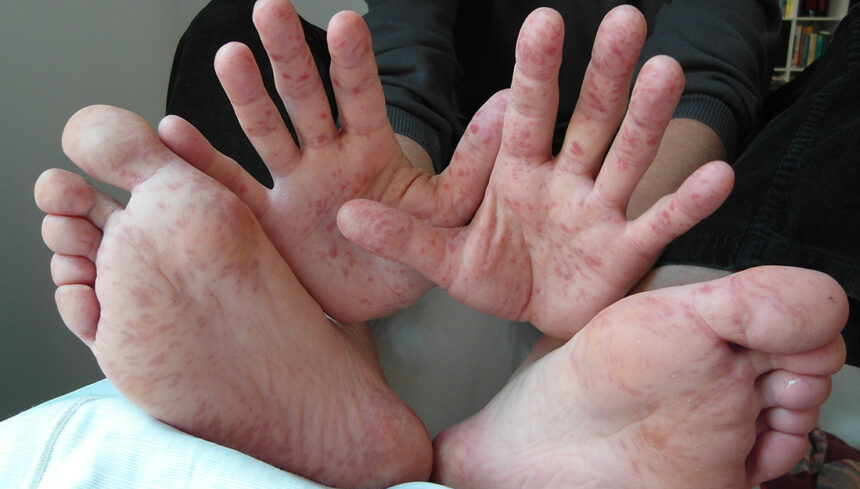
A skin rash may also develop on the palms of the hands and soles of the feet, appearing as flat red spots, sometimes with blisters. The rash may also appear on the knees, elbows, buttocks, or genital area.
Children may return to school once:
- The fever has subsided;
- They feel well enough to participate in normal activities;
- There are no drooling mouth sores;
- A medical certificate is not required for re-entry.
The Ministry advises the following precautionary measures:
- Children showing symptoms of HFMD should remain at home;
- Schools are not required to close unless multiple cases are identified within a short period, warranting enhanced cleaning and sanitization;
- Educators, parents, and children should wash hands frequently and thoroughly with soap and water, especially after diaper changes or using the toilet, and before preparing or eating food;
- Thoroughly clean and then sanitize contaminated surfaces, toys, and soiled items;
- Avoid sending children to daycare or school if they are unwell;
- Practice safe food and water hygiene;
- Avoid close contact (e.g., kissing, hugging) with infected individuals;
- Seek medical attention if symptoms worsen, including persistent fever, reduced appetite, or worsening blisters on the hands, feet, or mouth.
The Ministry will continue to monitor the situation and provide updates as necessary.