

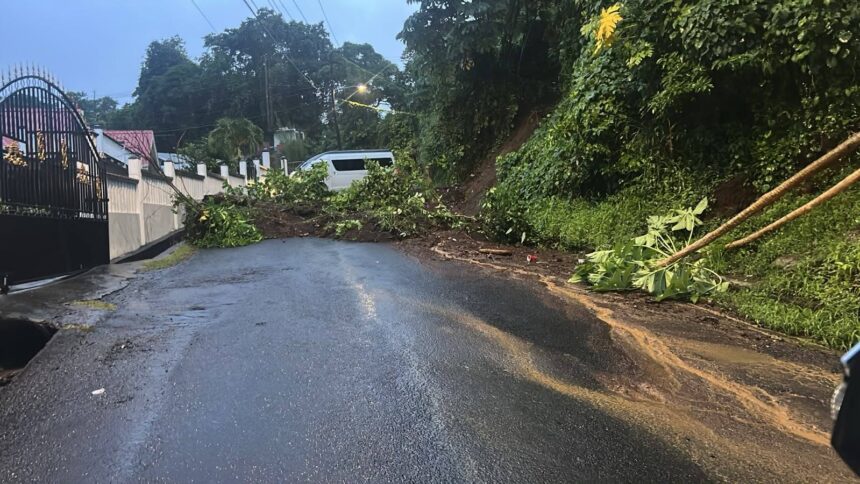
The torrential rains that battered Saint Vincent and the Grenadines on Tuesday, October 6th, 2026, left a trail of destruction amounting to an estimated EC$7.7 million, Prime Minister Hon. Dr. Godwin Friday revealed during his 47th Independence Anniversary Address at the Arnos Vale Sports Complex.
Addressing thousands of Vincentians at home and across the diaspora, Dr. Friday laid bare the severe human and infrastructural cost of the deluge, which dumped an extraordinary 5.1 inches of rain on the country in a single 24-hour period.
The relentless rainfall triggered widespread landslides, blocked major public roads, and caused catastrophic structural damage to private residences and public infrastructure. Official post-disaster assessments confirmed that 11 homes were completely destroyed.
The Prime Minister identified six communities as having borne the brunt of the disaster:
- Buccament
- Pembroke
- Questelles
- Rilland Hill
- Clare Valley
- Marriaqua
Emergency crews and multi-agency response teams under the National Emergency Management Organisation (NEMO) were deployed immediately to coordinate relief and rescue efforts.
Prime Minister Friday commended the coordinated rapid response led by the Deputy Prime Minister and Minister of National Security, the Royal Saint Vincent and the Grenadines Police Force, NEMO personnel, and the Ministries of Housing, Transport and Infrastructure, and Social Welfare. Continued relief and rehabilitation assistance remain underway for displaced and affected residents.
Placing the disaster within a broader global context, Prime Minister Friday warned that the increasing frequency of extreme weather events is an undeniable indicator of the island nation’s climate vulnerability.
“We continue to see and experience the effects of severe weather events far too frequently,” Dr. Friday stated, emphasizing that Saint Vincent and the Grenadines must aggressively cut its carbon footprint and build climate resilience.
In response, the Government has committed to an aggressive transition toward domestic renewable energy sources, setting a national target to generate the vast majority of the country’s electricity from renewables within the next decade—a move the Prime Minister noted is made even more imperative by geopolitical conflicts in the Middle East that have driven international Brent crude oil prices above US$116 per barrel.
