

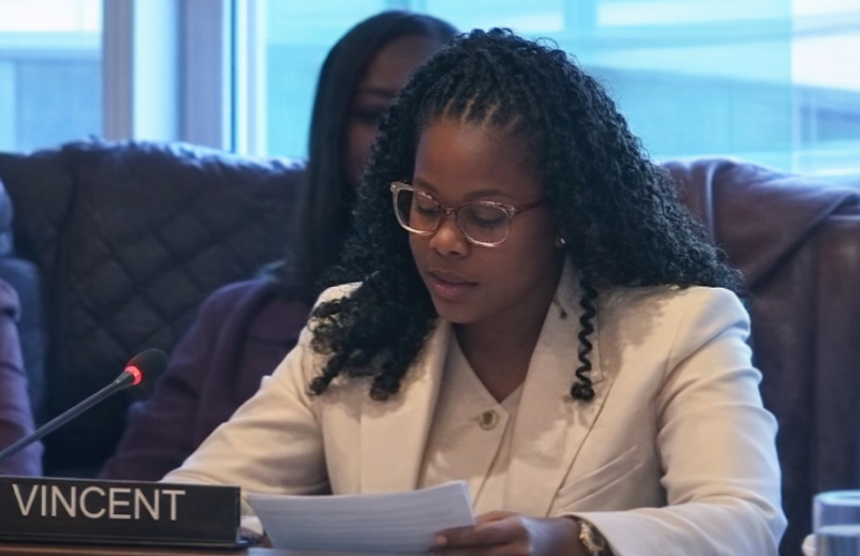
St. Vincent and the Grenadines has officially taken its seat on the UNESCO Executive Board, using its inaugural address to call for urgent financial reforms, improved organizational accountability, and a tangible commitment to supporting Small Island Developing States (SIDS),.
Addressing the Chairperson and the Director-General, Hon. Lavern King emphasized that the nation’s election comes at a time of “rising conflict, profound global uncertainty, climate pressures, and declining confidence in multilateralism”. The delegation stressed that UNESCO’s mandate in education, sciences, culture, and communication is now “indispensable more than ever” to strengthen the foundations of peaceful and inclusive societies,.
A significant portion of the address focused on the structural and financial constraints currently limiting UNESCO’s potential. While the representative noted that growing voluntary contributions reflect strong global confidence in the organization, they warned that the “predominance of earmarked funding” creates a critical imbalance.
This reliance on restricted funding has led to postponed activities and reduced field engagement, prompting St. Vincent and the Grenadines to call for a “cautious” approach to new initiatives,. The delegation urged that current programs must undergo strict prioritization aligned with available resources rather than adding unnecessary layers to the organization’s workload.
The representative also highlighted “systemic challenges” in UNESCO’s governance and administration, citing a recent review by the Joint Inspection Unit,. These challenges include:
- Accountability mechanisms and internal communication issues.
- Coordination gaps between headquarters, field offices, and institutes.
- The need for a new human resource strategy.
On the topic of human resources, the delegation made a pointed call for equitable geographical representation, noting that St. Vincent and the Grenadines is not yet represented among UNESCO’s staff. They expressed a desire for “clear recruitment procedures” to ensure smaller member states have a voice within the Secretariat.
Perhaps the most forceful part of the address concerned the status of Small Island Developing States (SIDS). Despite being designated as a “priority group” within UNESCO, the representative argued that SIDS remain underfunded and face significant implementation challenges on the ground.
“SIDS cannot remain a priority group in principle,” the representative declared. “We must be a priority in practice”. The nation called for more “targeted and predictable support,” a stronger presence in the field, and better access to flexible funding to ensure these vulnerable nations are not left behind.
Concluding the address, St. Vincent and the Grenadines pledged its “full cooperation” and “active contribution” to the board, reaffirming its commitment to ensuring UNESCO serves as a global pillar for peace, sustainability, and human development.
