

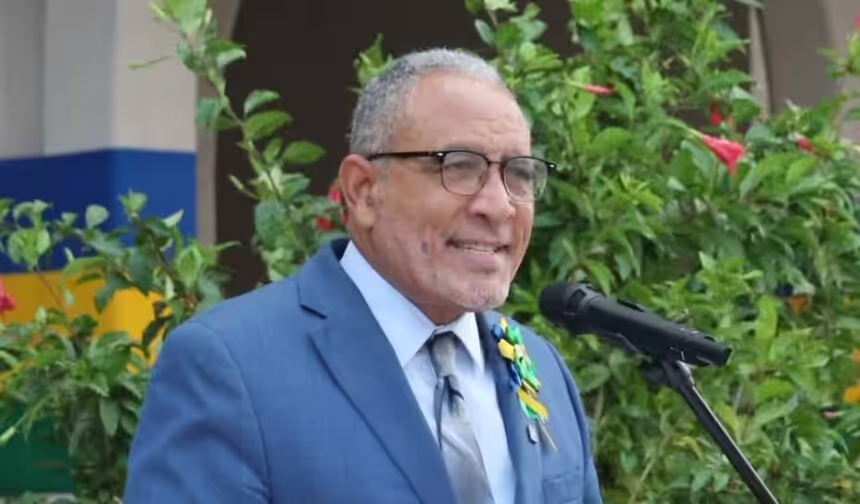
The government of St. Vincent and the Grenadines, led by Prime Minister Dr. Godwin Friday, has been commended for maintaining a principled stance at the United Nations General Assembly, voting in favor of a resolution calling for an end to the illegal United States embargo against Cuba.
The annual resolution, sponsored by Cuba since 1992, was overwhelmingly adopted by the UN General Assembly with 130 countries voting in favor, 17 voting against, and 25 abstaining. St. Vincent and the Grenadines joined the international majority in declaring the US embargo unilateral, illegal, and in direct violation of international law.
According to legal analyst and commentator Jomo Thomas, speaking on the radio program Plain Talk, official instructions from Kingstown directed the diplomatic delegation to reject political compromises and stand strictly on international law and sovereign principle.
This position was maintained despite intense diplomatic pressure—including from fellow Caribbean Community (CARICOM) nations—attempting to persuade St. Vincent to abstain or vote against the motion.
The vote revealed notable shifts in regional alignment within CARICOM:
Standing Firm: St. Vincent and the Grenadines and Barbados (under Prime Minister Mia Mottley) voted YES to end the embargo.
Voting Against: Trinidad and Tobago, under the leadership of Kamla Persad-Bissessar, voted NO, marking the first time a CARICOM member voted against the resolution.
Abstain & Absent: Jamaica, Guyana, and Haiti abstained, while Antigua and Barbuda, Dominica, and St. Lucia were absent from the vote.
Thomas noted that these abstentions and opposing votes represent a departure from the historical regional solidarity established in 1972, when core Caribbean leadership broke Cuba’s diplomatic isolation.
Thomas commended Prime Minister Dr. Godwin Friday’s administration for holding the line under heavy pressure. He urged national figures across political lines—including former foreign ministers Camilo Gonsalves and Keisal Peters, as well as former prime minister Ralph Gonsalves—to issue a united national statement commending the government’s stance.
Thomas emphasized that had the administration voted differently or abstained, it would have faced severe public condemnation, making cross-party recognition for standing on principle all the more critical.
The vote takes place amid severe economic hardship in Cuba, which suffered an estimated $7.5 billion in financial losses between March 2024 and February 2025 due to US sanctions.
Despite these embargo pressures, Cuba’s long-standing international contributions were highlighted, including providing free university education to over 74,000 international students from 159 nations since the 1970s.
