

St. Vincent and the Grenadines Secures Key Wins and Assumes Leadership Role at WTO’s MC14 in Cameroon
The World Trade Organization (WTO) recently concluded its 14th Ministerial Conference (MC14), wrapping up in the early hours of March 30, 2026, following intensive negotiations in Yaoundé, Cameroon. Bringing together roughly 150 countries and 90 trade ministers, the conference tackled an ambitious agenda aimed at reforming the global trading organization and making it more fit for purpose. For St. Vincent and the Grenadines, the summit yielded critical advancements in protecting the nation’s blue economy and securing special trade provisions for small developing states.
A major breakthrough for St. Vincent and the Grenadines was signing and becoming a party to the fisheries subsidies agreement, which aims to end harmful subsidies that contribute to overfishing and overcapacity. According to the Food and Agricultural Organization (FAO), 35.5% of global fish stocks are currently overfished, a situation heavily driven by an estimated $20 billion in harmful subsidies spent mostly by industrialized fishing nations.
This dynamic has severely impacted small fishing nations; over the past five years, fish exports from St. Vincent and the Grenadines have plummeted by almost 90% due to a combination of natural disasters and illegal fishing on the unregulated high seas.
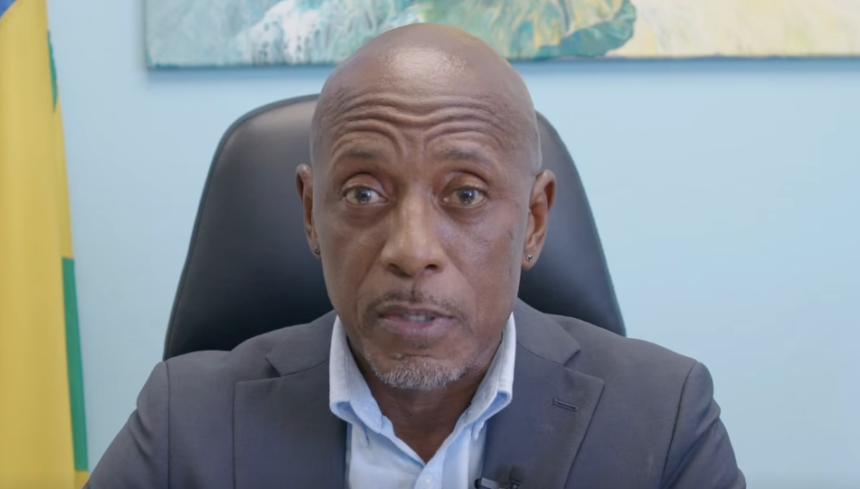
By joining the agreement, St. Vincent and the Grenadines is now entitled to vital technical assistance to monitor local fish stocks and combat illegal, unregulated, and unreported fishing. The Minister of Foreign Trade, who attended the conference on behalf of the nation, noted that this mechanism will help “boost our blue economy” and ensure “there are still fish in the sea for future generations”.
In addition to the fisheries agreement, trade ministers adopted two crucial decisions designed specifically to benefit developing nations. Acknowledging the extreme vulnerabilities of small economies, the WTO agreed to operationalize special and differential treatment provisions regarding sanitary and phytosanitary measures, as well as technical barriers to trade.
“Because we are small economies and we’re so vulnerable, it’s really not a level playing field,” the Minister explained. These newly adopted measures are expected to provide empirical evidence to help overcome constraints to economic growth and are geared toward building capacity and enhancing foreign market access for agricultural and fisheries exports. The ultimate objective is to allow small states to grow their economies by trading within an effective, rules-based global environment without being taken advantage of.
St. Vincent and the Grenadines not only participated in the talks but took on a significant leadership role on the global stage. The nation’s Minister of Foreign Trade was selected to chair and facilitate negotiations on the Investment Facilitation for Development Agreement (IFDA). This plurilateral agreement aims to modernize how governments approach receiving foreign direct investment.
Although the IFDA discussions created a significant impact and provided a great opportunity for small island developing states to make their mark, it has not yet been integrated into the official WTO framework because it requires absolute consensus among all members, and one country objected. Negotiations remain ongoing, and the Minister expressed hope that consensus will be reached soon.
Urgent work will continue at the WTO headquarters in Geneva, with several critical deadlines set for May and mid-2026. Members hope to finalize an agreement on preventing the imposition of customs duties on electronic transmissions (e-commerce), a rapidly growing economic sector for many nations.
Furthermore, there is a strong push to agree on a roadmap for comprehensive WTO reform by mid-2026. This reform aims to address the organization’s partially functioning dispute settlement system, a paralyzed negotiating function, and the flagrant breach of trade rules by a few powerful countries. Reforming global agriculture markets is also an urgent priority to protect small nations from the impact of cheaper, heavily subsidized agricultural imports and to strengthen food and nutrition security.
Reflecting on the conference, the Minister stressed the absolute necessity of active participation for small nations in today’s fast-changing geopolitical and geoeconomic landscape.
Paraphrasing a famous quote regarding global negotiations, the Minister remarked, “If we’re not at the table… then we will be on the table as a part of the menu”. By aggressively driving the narrative and demanding change at MC14, St. Vincent and the Grenadines has ensured it remains a vital voice in the future of global trade.
