


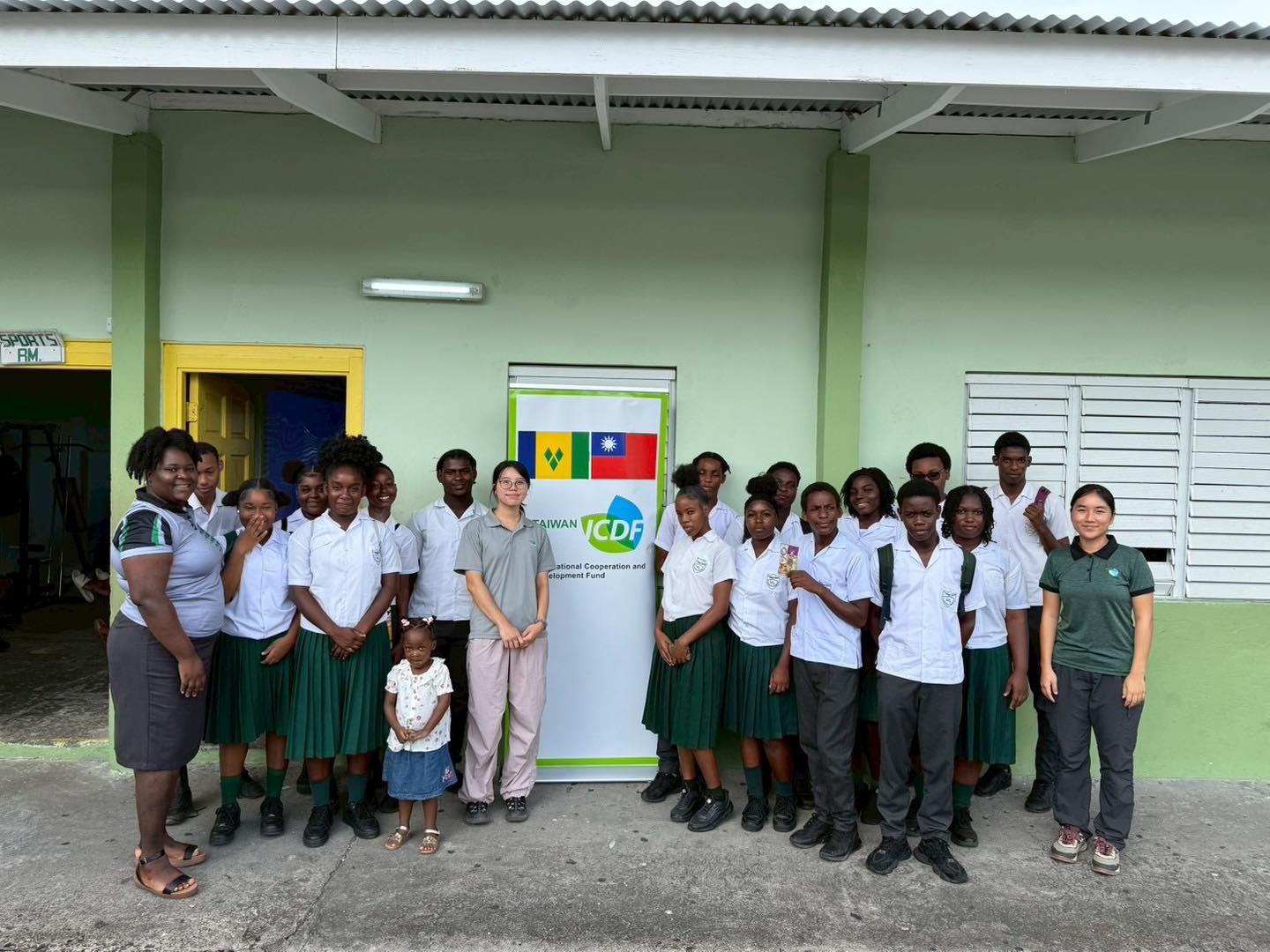
When we picture livestock farming, we often imagine a field unchanged by time. But in a classroom in Saint Vincent, students recently discovered a different reality—one where artificial intelligence and robotics are transforming the industry.
The core lesson for the students at Troumaca Ontario Secondary School was the concept of “smart agriculture”—the use of technology to dramatically improve efficiency and management in the livestock industry. Intern Yu-Hsuan Chen demonstrated that modern farming is as much about data and engineering as it is about soil and animals.
Students were introduced to specific technologies that are reshaping the field:
• Electronic Identification (EID) ear tags for animals, which, when combined with weighing systems, allow for precise individual monitoring.
• Robotic milking machines that automate one of farming’s most labor-intensive daily tasks.
• AI animal monitoring systems, including Taiwan-developed technologies like sow estrus detection systems and AI breeding management systems, which bring predictive power to farm-level decision-making.
These innovations show how traditional farming is evolving into a sophisticated, data-driven field with new possibilities for efficiency and animal welfare.
The lesson wasn’t just a technical lecture on hardware and software; it was a genuine cultural exchange. Yu-Hsuan Chen fostered a relaxed and joyful atmosphere, proving that human connection is the essential catalyst for learning.
During a fun quiz activity, she shared a taste of her home country, offering Taiwanese milk tea, Hakka lei cha, and oat drink sachets as prizes. The impact was immediate and observable: Chen noted a distinct change in the students’ understanding and perspectives from before the class to after. By building a personal connection, she created a receptive environment where students could absorb complex new ideas about the future of their own local industries.
The overarching purpose of this exchange was not just to transfer information, but to “plant a small seed” in the students’ hearts. The hope is that this single class might inspire some of them to one day enter the livestock industry, equipped with the knowledge that they can use smart agriculture to bring new possibilities to Saint Vincent.
As intern Yu-Hsuan Chen reflected on the experience:
“Being able to visit a local school in Saint Vincent and communicate closely with the students was a truly rare and valuable experience. Beyond comparing differences between Taiwan and the local context, what mattered most was hearing the thoughts of the younger generation here and letting them see Taiwan’s efforts and potential in livestock farming and smart agriculture. Studying in a campus surrounded by mountains and the sea was truly a joyful experience.”
Her words highlight a profound truth: effective development is about listening to the next generation, showing them what is possible, and remembering the shared human experience that underpins all successful collaboration.