


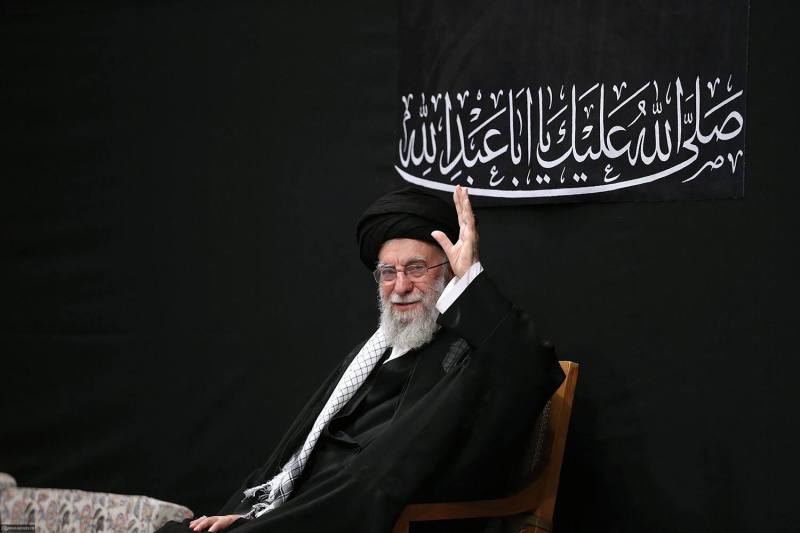
The Iranian Revolutionary Guard Corps has responded to Khamenei’s death, saying “we have lost a great leader and we mourn him”, according to a statement carried by Fars news agency.
It added that Khamenei’s “martyrdom at hands of the most vicious terrorists and executioners of humanity is a sign of the legitimacy of this great leader and the acceptance of his sincere services”.
It added that the “Iranian nation’s hand of revenge…will not let them go”.
The IRGC will stand “firm in confronting domestic and foreign conspiracies,” the statement said.
Khamenei took the helm of the Islamic republic in 1989 following the death of Ayatollah Ruhollah Khomeini, the charismatic leader who had spearheaded the Islamic revolution a decade earlier.
While Khomeini was the ideological force behind the revolution that ended the rule of the Pahlavi monarchy, it was Khamenei who shaped the military and paramilitary apparatus that form both Iran’s defence against its enemies, and provide it with influence well beyond its borders.
Before becoming supreme leader, he had led Iran as president through a bloody war with Iraq in the 1980s.
The grinding conflict, coupled with a sense of isolation among many Iranians as Western countries backed Iraqi leader Saddam Hussein, deepened Khamenei’s distrust of the West generally and the United States, in particular, analysts say.
That sentiment would underpin his decades-long rule and cement the idea that Iran must remain in a constant state of defence against external and internal threats.