

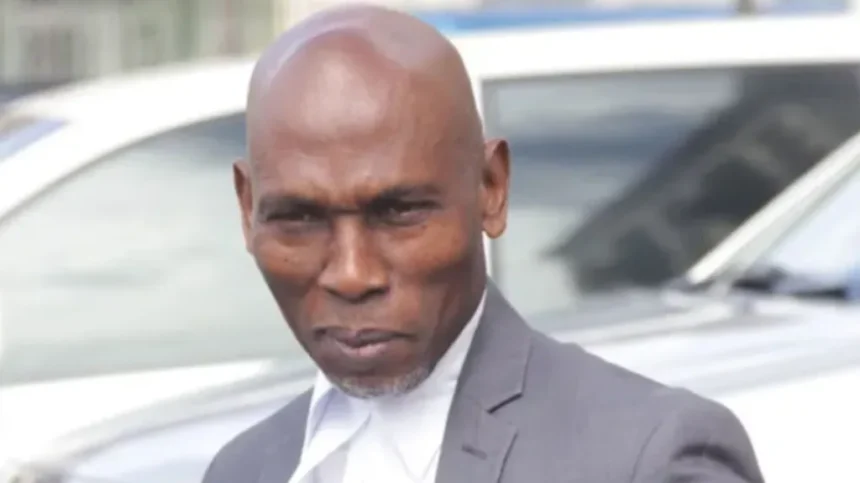
Speaking on the radio commentary program Plain Talk, attorney and legal analyst Jomo Thomas delivered a sharp critique of the recent United Nations General Assembly vote regarding the United States embargo against Cuba, praising St. Vincent and the Grenadines while expressing deep disappointment over shifts in broader regional support.
The annual resolution sponsored by Cuba, which calls for an end to the U.S. economic embargo, was adopted by the UN General Assembly with 130 countries voting in favor, 17 voting against, and 25 abstaining.
Thomas highlighted a marked drop in global backing compared to 2022, when 185 countries supported ending the embargo. He attributed this decline directly to diplomatic pressure, blackmail, and a lack of principle among several national governments.
Examining the vote across the Caribbean Community (CARICOM), Thomas noted significant departures from traditional regional solidarity:
Voting In Favor: St. Vincent and the Grenadines and Barbados (under Prime Minister Mia Mottley) stood firm and voted YES to end the embargo.
Voting Against: Trinidad and Tobago, under Prime Minister Kamla Persad-Bissessar, voted NO, marking the first time a CARICOM member nation voted against the resolution.
Abstaining: Jamaica, Guyana, and Haiti abstained from the vote.
Absent: Antigua and Barbuda, Dominica, and St. Lucia absented themselves from the assembly hall.
Thomas contrasted these decisions with the historical leadership shown in 1972, when prime ministers Michael Manley (Jamaica), Forbes Burnham (Guyana), Eric Williams (Trinidad and Tobago), and Errol Barrow (Barbados) jointly established diplomatic relations with Cuba to break its international isolation. He described the current posture of several larger CARICOM states as a historic regression.
According to Thomas, Vincentian diplomats experienced intense pressure—including from fellow CARICOM member states—to abstain or vote against the motion. However, official instructions from Kingstown directed the delegation to maintain a firm stance grounded in international law and sovereignty.
Thomas commended Prime Minister Dr. Godwin Friday for holding the line. He urged figures across the political spectrum—including former foreign ministers Camilo Gonsalves and Keisal Peters, as well as former prime minister Ralph Gonsalves—to issue a unified national statement commending the government’s stance.
Thomas observed that had the government caved or abstained, it would have faced severe public condemnation, making cross-party support essential when principle is maintained.
Highlighting the severe humanitarian conditions in Cuba, Thomas cited figures showing the island suffered an estimated $7.5 billion in financial losses between March 1, 2024, and February 28, 2025, as a direct result of U.S. sanctions. He also referenced historic acts of aggression, including the 1976 Cubana airline bombing off Barbados that killed 73 civilians and the 1967 CIA-backed execution of Che Guevara in Bolivia.
Despite these ongoing pressures, Thomas described Cuba as a “point of light,” citing its contribution of providing free university education to 74,000 international students from 159 countries since the 1970s. He concluded that while several nations buckled under pressure, St. Vincent and the Grenadines chose to stand on its feet rather than its knees to defend international law.
