
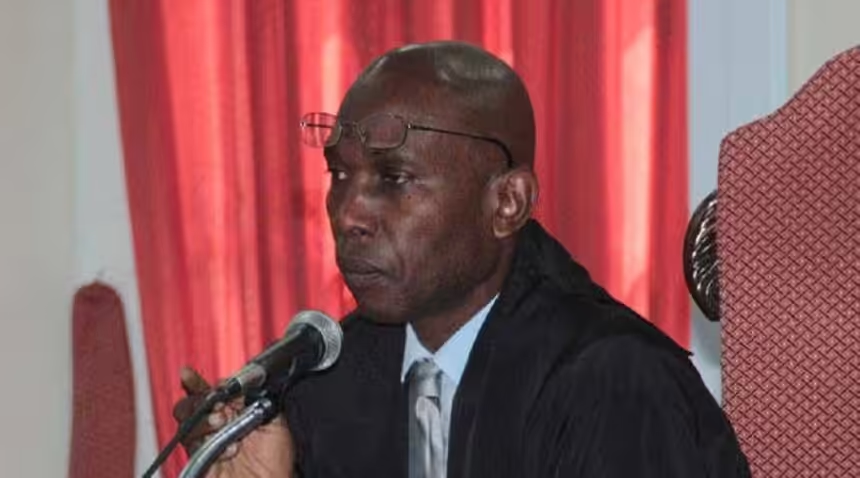
Former Speaker of the House of Assembly and legal practitioner Jomo Thomas has issued a stark warning to Caribbean governments regarding shifting superpower alliances, pointing to a reported United States State Department effort to pressure Guyana into ceding disputed territory to Venezuela. Speaking on his radio program Plain Talk with Jomo Thomas, the commentator cited a Reuters disclosure detailing a diplomatic visit to Georgetown by Jeremy Lewin, chief of state department policy planning, during which American officials urged Guyanese leadership to consider territorial concessions to resolve the long-standing Essequibo border conflict.
The reported diplomatic pivot marks a dramatic reversal from Washington’s prior insistence that Guyana’s international boundaries remain inviolable. Thomas emphasized that the policy shift comes in the wake of the January 3, 2026 U.S. military intervention in Venezuela, which resulted in the capture of President Nicolás Maduro and the establishment of a compliant administration under Executive Vice President Delcy Rodríguez and legislative head Jorge Rodríguez. Thomas noted that senior American officials, including National Security Council Chair and Secretary of State Marco Rubio, have since made covert diplomatic visits to Caracas to consolidate U.S. oversight over Venezuela’s immense petroleum and mineral wealth.
Contextualizing the territorial dispute, Thomas recalled that the boundary between Guyana and Venezuela was established under an 1897 international arbitral award between British and Spanish colonial authorities. While Venezuela reopened claims over two-thirds of Guyanese territory in the mid-twentieth century alleging arbitral impropriety, regional diplomacy achieved a key stabilization measure in December 2023 when former Prime Minister Dr. Ralph Gonsalves hosted the Argyle Declaration summit in St. Vincent, bringing together Guyanese President Irfaan Ali and Venezuelan President Maduro alongside Barbadian Prime Minister Mia Mottley.
Addressing the pending legal adjudication before the International Court of Justice (ICJ), Thomas highlighted that Guyana’s legal expenses before the tribunal have been fully funded by multinational oil corporation ExxonMobil, which continues to reap substantial profits from offshore Guyanese oil fields. With an ICJ ruling anticipated next year, Thomas warned that international judicial bodies remain susceptible to geopolitical leverage, drawing parallels to U.S. sanctions leveled against the International Criminal Court after its warrants were issued for Israeli Prime Minister Benjamin Netanyahu and former Defense Minister Yoav Gallant.
Thomas framed the diplomatic development as a classic illustration of international realpolitik, recalling that Washington previously supported Venezuela against Guyana during the 1960s leadership of Marxist President Cheddi Jagan, realigned with Guyana during the Bolivarian administrations of Hugo Chávez and Maduro, and has now pivoted once again after bringing Caracas into its strategic sphere. Concluding his commentary on the anniversary of the New Democratic Party’s election victory, Thomas urged small island developing states across the Caribbean to maintain steadfast foreign policy principles rather than compromising national sovereignty for transactional concessions, such as U.S. or Schengen visa access.
