


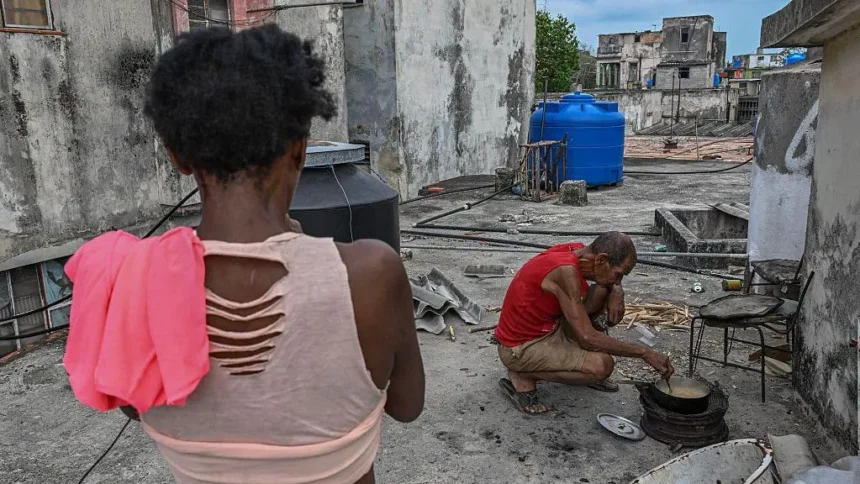
Cuba has completely run out of diesel and fuel oil, triggering a massive energy crisis that has plunged parts of Havana into 20 to 22-hour blackout periods. Energy Minister Vicente de la O Levy described the country’s energy system as being in a “critical” state, confirming that the nation has absolutely no crude or diesel fuel left and is surviving solely on limited amounts of gas from domestic wells.
The crippling shortages have brought daily life on the island to a standstill, crippling the tourism industry, forcing the closure of schools and government offices, and leaving hospitals unable to function normally.
In response to the extreme conditions, rare and widespread protests erupted across Havana on Wednesday evening. Hundreds of frustrated residents took to the streets, setting up road blockades with burning rubbish and chanting anti-government slogans. In the San Miguel del Padron neighborhood, crowds were heard shouting, “turn on the lights!” in what has been reported as the largest single night of demonstrations since the country’s energy crisis began in January.
The root of the severe shortage is directly tied to a U.S.-led blockade that has systematically choked off the island’s fuel supply. While Cuba typically relies on Venezuela and Mexico to supply its refineries, these crucial lifelines were largely cut off after U.S. President Donald Trump threatened to impose severe tariffs on any country sending fuel to the island. Cuban President Miguel Diaz-Canel took to social media to denounce the U.S. actions, stating that the situation has a single cause: “the genocidal energy blockade to which the United States subjects our country”.
The blockade was further escalated in early May when Washington targeted senior Cuban officials with sanctions over alleged “human rights abuses”—measures that Cuban Foreign Minister Bruno Rodriguez condemned as “illegal and abusive”.
Amid the escalating crisis, the U.S. State Department reiterated an offer to send $100 million in humanitarian assistance in exchange for “meaningful reforms to Cuba’s communist system”. The U.S. proposed distributing the aid through the Catholic Church and other “reliable” humanitarian organizations. While U.S. Secretary of State Marco Rubio claimed that Havana rejected the financial aid, Cuba has denied this claim. The State Department maintained that the decision rests with the Cuban regime to either accept the assistance or “be accountable to the Cuban people for standing in the way of critical assistance”.
This recent collapse follows months of political strain and minor concessions. In early April, Cuba released over 2,000 prisoners amid mounting U.S. pressure. Prior to that, the island experienced brief relief in late March when a Russian oil tanker was allowed to dock after President Trump suggested he had “no problem” with the shipment, temporarily loosening the near-total blockade. However, that relief was short-lived, and the current absolute depletion of fuel oil and diesel has once again left the nation deeply impoverished and in the dark