
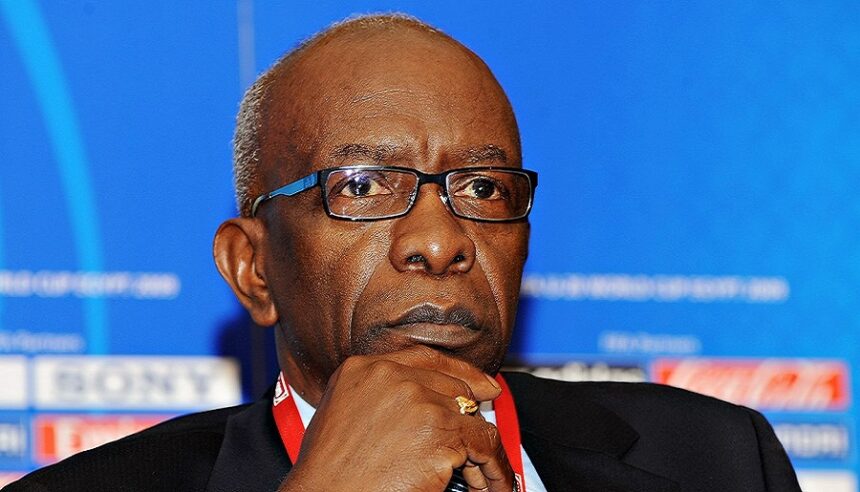
Former FIFA vice-president Jack Warner has secured a landmark legal victory after more than ten years of extradition proceedings, as the High Court has permanently halted efforts to send him to the United States. Madame Justice Karen Reid delivered a 71-page judgment finding that the State violated Warner’s constitutional rights by unlawfully pursuing the case.
The court ruled that the continuation of the extradition proceedings breached Warner’s rights because the Authority to Proceed (ATP), which launched the process in 2015, was issued without the legal safeguards required under the Extradition Act of Trinidad and Tobago. Justice Reid also found that the Office of the Attorney General repeatedly misled the courts by claiming a special “bespoke” arrangement existed with the United States to protect Warner under the international specialty rule, when no such arrangement actually existed.
The specialty rule is a principle of law ensuring that an extradited person can only be prosecuted for the specific offences for which extradition was granted. Evidence obtained through a Freedom of Information request in 2023 revealed that the State had actually relied on general treaty provisions rather than the specific arrangement it had claimed to have negotiated.
Justice Reid was critical of the State’s conduct, describing it as a serious breach of the duty of candour and an abuse of the court’s process. The judgment noted that while the initial misunderstanding might not have been deliberate, the State failed to correct the record once it became aware the bespoke arrangement did not exist, allowing courts to proceed on a false premise. This conduct was found to have violated Warner’s constitutional rights to liberty and the protection of the law.
As a result of these findings, the judge ordered that the extradition proceedings be permanently stayed. Warner was awarded damages for the breaches of his constitutional rights, and the Attorney General was directed to pay his legal costs. Furthermore, the court restrained the Attorney General from enforcing previous costs orders made against Warner during earlier stages of the litigation.
The legal battle began in May 2015 when the United States requested Warner’s extradition for alleged money laundering offences. Warner challenged the process through various levels of the judiciary, eventually reaching the Privy Council, which had dismissed his appeal in 2022. However, the subsequent discovery regarding the non-existent specialty arrangement fundamentally altered the case, leading to this final ruling. An assessment of damages is scheduled for September 30, 2026.