
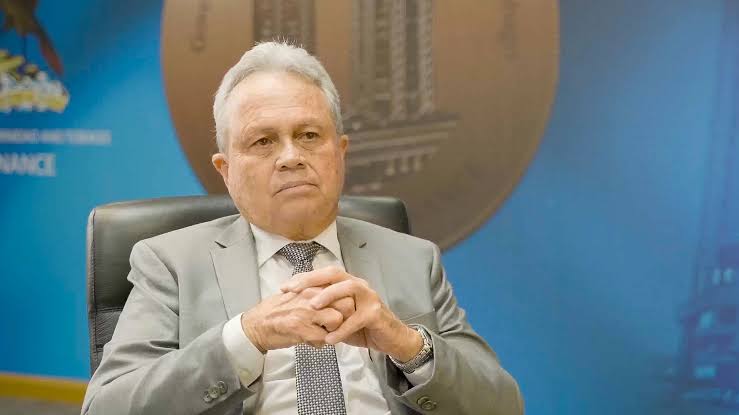
Opposition Member of Parliament and former Finance Minister Colm Imbert has delivered a scathing critique of the government’s economic policies, warning that Trinidad and Tobago is currently in a recession and “poised to crash within the coming months”.
Speaking during the parliamentary budget debate on the proposed 2026–2027 national budget presented by Minister of Finance Davendranath Tancoo, Imbert declared that he cannot support the package, characterizing its underlying financial figures as a “mirage,” “fictitious,” and “nonsense”.

Citing figures from the Ministry of Finance’s own review, Imbert highlighted a 2.2% decline in real Gross Domestic Product (GDP) and outlined contractions across nearly every major sector of the economy:
- Petrochemicals: Dropped sharply by 19.8%, which Imbert highlighted as the worst decline among industrial sectors.
- Non-Energy Sector: Contracted by 7%.
- Energy Sector: Fell by 6.6%, accompanied by reduced natural gas output.
- Accommodation & Food Services: Decreased by 5.1%.
- Trade & Repairs: Declined by 4.3%.
- Public Administration: Dropped by 3.4%.
- Construction: Contracted by 2.7%
Imbert pointed to domestic indicators as further evidence of an economic slump, stating that domestic cement sales plummeted by 44%, motor vehicle sales fell by 14.5%, and hardware and construction retail sales dropped by 12%. Additionally, tourist visitor arrivals fell by 9.3%, with Tobago experiencing a 32.4% drop.
Highlighting data from the Central Bank, Imbert argued that private sector confidence has collapsed. He noted that growth in business borrowing dropped precipitously from 11.4% in April 2025 to 0.6% in July 2026, indicating that local businesses have essentially halted taking on new debt to expand or invest.
Imbert also claimed that the country’s foreign exchange reserves are being artificially bolstered through external loan financing and withdrawals from the Heritage and Stabilisation Fund (HSF), rather than being generated organically by the domestic productive sector.
Critiquing the administration’s tax policy, Imbert alleged that despite previous promises to lower corporate tax rates and stimulate private enterprise, the government implemented 70 new or increased taxes and fees between May 2025 and September 2026.
He cited new measures such as an asset levy on commercial banks, electricity surcharges, business surcharges, container processing fees, and elevated national insurance contributions. Recalling past statements from Prime Minister Kamla Persad-Bissessar that a nation cannot be taxed into prosperity, Imbert asserted that the budget fails to offer business incentives or relief for citizens facing rising economic hardship.