


US wants St Lucia to ban nationals from studying medicine in Cuba, says PM
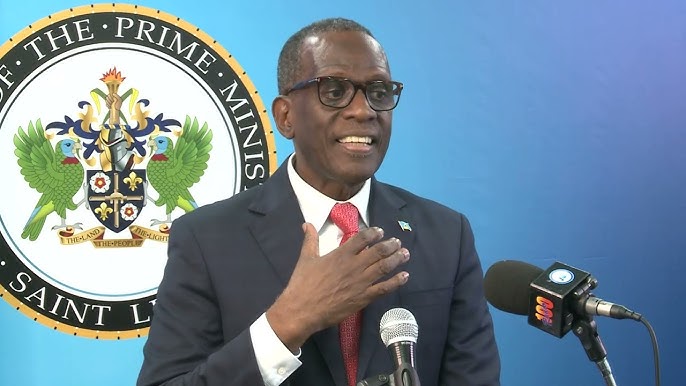
In a bombshell report delivered just ahead of the St. Kitts CARICOM summit, Prime Minister Philip Pierre of St. Lucia revealed that Washington has moved beyond general policy shifts to issuing direct, sovereign edicts. St. Lucia has been explicitly ordered to stop sending its students to Cuba for degrees in medicine and other essential fields.
For decades, Cuba has been the primary educational engine for the region’s professional class. By demanding the closure of this educational pipeline, the U.S. is creating a “massive political dilemma” for Pierre, who must now face the reality of a future healthcare sector without a training ground.
“Many of our doctors got trained in Cuba, and now the great US has said we cannot do that any longer so that is a major problem I have to face. Some of my colleagues (prime ministers) have already taken a position on this and banned them. So, the American government has said that we cannot even train them in Cuba, so I have a major issue on my hands.”
The U.S. State Department is currently wielding visa access as a weapon of total compliance, a move that signals a “one-way street” in regional relations. In December, the U.S. singled out citizens of Dominica and St. Vincent, banning them from tourist visa applications. This was the opening salvo in a relentless string of political edicts.
Washington has since added most of the 15-nation Caribbean regional bloc to a list of 75 countries worldwide banned from processing immigrant or permanent visas.
The current U.S. stance presents a staggering irony that threatens a regional healthcare collapse. While Secretary of State Marco Rubio demands the removal of Cuban medical brigades—which several governments have warned are the only thing keeping their health sectors from imploding—the U.S. has simultaneously shuttered USAID and its funded programs in the region.
This creates a dangerous vacuum. Washington is demanding the removal of an “indispensable partner” while providing no alternative. By stripping away U.S. aid and then banning the region’s primary source of medical personnel, the U.S. is leaving these island nations with zero options for maintaining public health.
The friction between Washington and the Caribbean is perhaps most visible in the “modern slavery” allegations championed by Marco Rubio, who serves as the Trump administration’s frontman on the issue. Rubio argues that because the Cuban government retains a majority of the professionals’ salaries (leaving workers with less than 20%), the program is a form of human trafficking.
However, this argument faces a significant credibility gap at the St. Kitts summit. The summit chair, Prime Minister Terrance Drew, is himself a Cuban-trained physician. His perspective is not one of a detached politician, but of a product of the very system the U.S. seeks to dismantle. Drew views these professionals as “pillars of society” and “family” rather than victims, highlighting a fundamental disconnect between U.S. rhetoric and Caribbean reality.
“The federation values its relations with both Cuba and the U.S. We are a friend to all and an enemy of none. Any accusations of labor practices in our federation are inconsistent with our laws and values.”
The U.S. campaign of geopolitical brinkmanship extends beyond healthcare into the realm of high-tech surveillance. Even as it restricts the movement of Caribbean citizens via visa bans, Washington is pressuring these nations to allow the U.S. military to install “high-tech radar stations” on local soil.
The asymmetry is glaring, the U.S. requests land for its military technology while simultaneously mandating that member states accept U.S. deportees. This has forced a strategic shift among regional bodies; the Organization of Eastern Caribbean States (OECS) has signaled it wants to talk “collectively” about the deportee mandate to protect regional interests. It is a striking contradiction to ask for the hospitality of a radar base from nations currently being treated as diplomatic pariahs.