
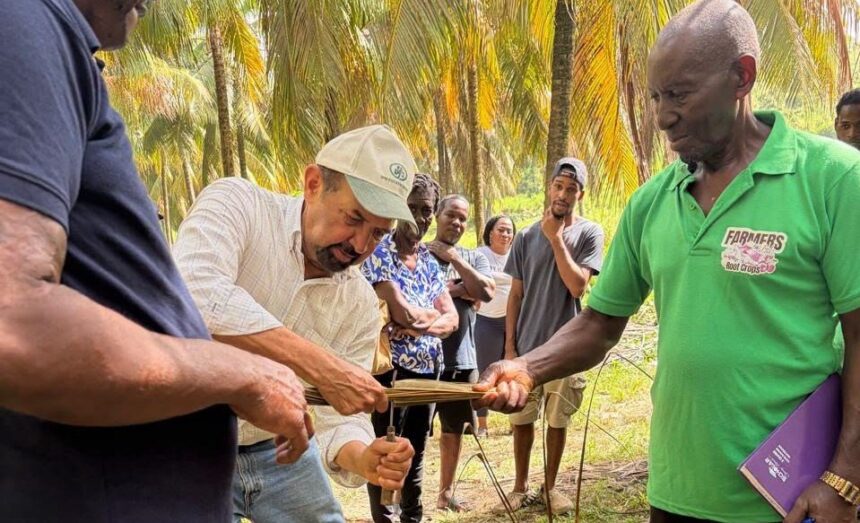
A vital United Nations agricultural initiative is now in full swing across Saint Vincent and the Grenadines, aiming to inject modern expertise and sustainable practices into the nation’s coconut and soursop industries.
The technical mission, spearheaded by the Food and Agriculture Organization of the United Nations (FAO), commenced on August 24 and is scheduled to run through August 31, 2026. Operating under the FAO’s Technical Cooperation Programme, the mission is a cornerstone of the project titled “Building Effective Public-Private Partnerships for Production and Marketing of Sustainable Agricultural Products” (Project code: TCP/SVG/4001).
This initiative represents a critical step forward in local agricultural development, focusing on enhancing capacity, improving crop yields, and establishing resilient agricultural systems.
The primary objective of the mission is to deliver comprehensive, practical training to local agricultural stakeholders, focusing on two highly valuable crops: coconut and soursop.
For the coconut sector, the curriculum is designed to modernize production and management. Participants are receiving training on a wide array of vital topics, including:
- Nursery development and orchard establishment to secure a healthy start for new crops.
- Soil and plant nutrition to optimize crop growth and maximize yields.
- Pest and disease management to protect valuable fields from devastation.
- Harvesting techniques and rehabilitation of older fields to improve productivity.
- Good Agricultural Practices (GAP) to align local operations with international sustainability and safety standards.
Recognizing the growing economic potential of soursop, the mission also features dedicated training segments for this tropical fruit. The curriculum for soursop includes essential practices such as:
- Propagation and grafting to cultivate high-quality, resilient crop varieties.
- Orchard management and pruning to maintain tree health and simplify harvesting.
- Fertilization and targeted pest management to enhance fruit quality and overall yield.
The training program is designed to reach multiple communities across Saint Vincent. The initial phase of the mission began at Orange Hill, where participants successfully completed two consecutive days of intensive training. A third session is scheduled to take place at Orange Hill on Wednesday, August 26, before the training operations move to the Leeward side of the island. There, further hands-on sessions will be conducted in Layou, ensuring broad geographical coverage and accessibility for local agricultural communities.
The program has successfully convened a diverse cohort of participants, bridging the gap between field work and policymaking. Attendees include:
- Local farmers seeking to modernize their operations and improve their livelihoods.
- Agricultural extension officers who will help disseminate these modern practices to other farmers.
- Ministry of Agriculture personnel tasked with supporting and overseeing the sector’s development.
- Other key agricultural stakeholders invested in Saint Vincent’s value chain.
To ensure the highest standard of technical training, the FAO has engaged Dr. Abel Rebouças São José, an internationally recognized tropical fruit specialist from Brazil.
Dr. Rebouças brings a wealth of academic and practical experience to the mission. He is the former Rector of the Universidade Estadual do Sudoeste da Bahia and former President of the Brazilian Society of Fruit Growing. With decades of experience in tropical fruit research, teaching, extension, and industry development, Dr. Rebouças is widely respected for his specialized expertise in coconut and soursop cultivation.
Furthermore, Dr. Rebouças is a seasoned international consultant with the FAO, having previously led successful agricultural development initiatives across the Caribbean, including specialized assignments in Saint Lucia, Grenada, and Belize.